Origin
Singapore
Lifespan
9–15 years
Weight
2–4 kg
Group
Shorthair
Personality
Colors & Patterns
Sepia Agouti (Brown Ticked Tabby)
Singapura
About This Breed
The Singapura is one of the smallest breeds of cat, noted for its large eyes and ears, brown ticked coat, and blunt tail. Its name means 'Lion City' in Malay, which refers to Singapore. It is often described as pesky people-cats that love to be in the middle of whatever their humans are doing. Despite its small size, the Singapura is muscular and active, with a playful personality that lasts well into adulthood.
Characteristics
Getting to Know the Singapura
Origin & History
The Singapura developed naturally in Singapore over many generations before systematic breeding efforts standardised its distinctive traits. Today it is recognised by the world's major feline registries and cherished by enthusiasts across the globe.
Through the efforts of successive generations of dedicated breeders, the Singapura's distinctive appearance and temperament were gradually standardised and formally accepted by the world's leading feline registries. The breed is now a familiar presence at international cat shows and commands a devoted following worldwide.
Size & Physical Traits
| Weight | 2–4 kg |
| Lifespan | 9–15 yrs |
| Size | medium-sized |
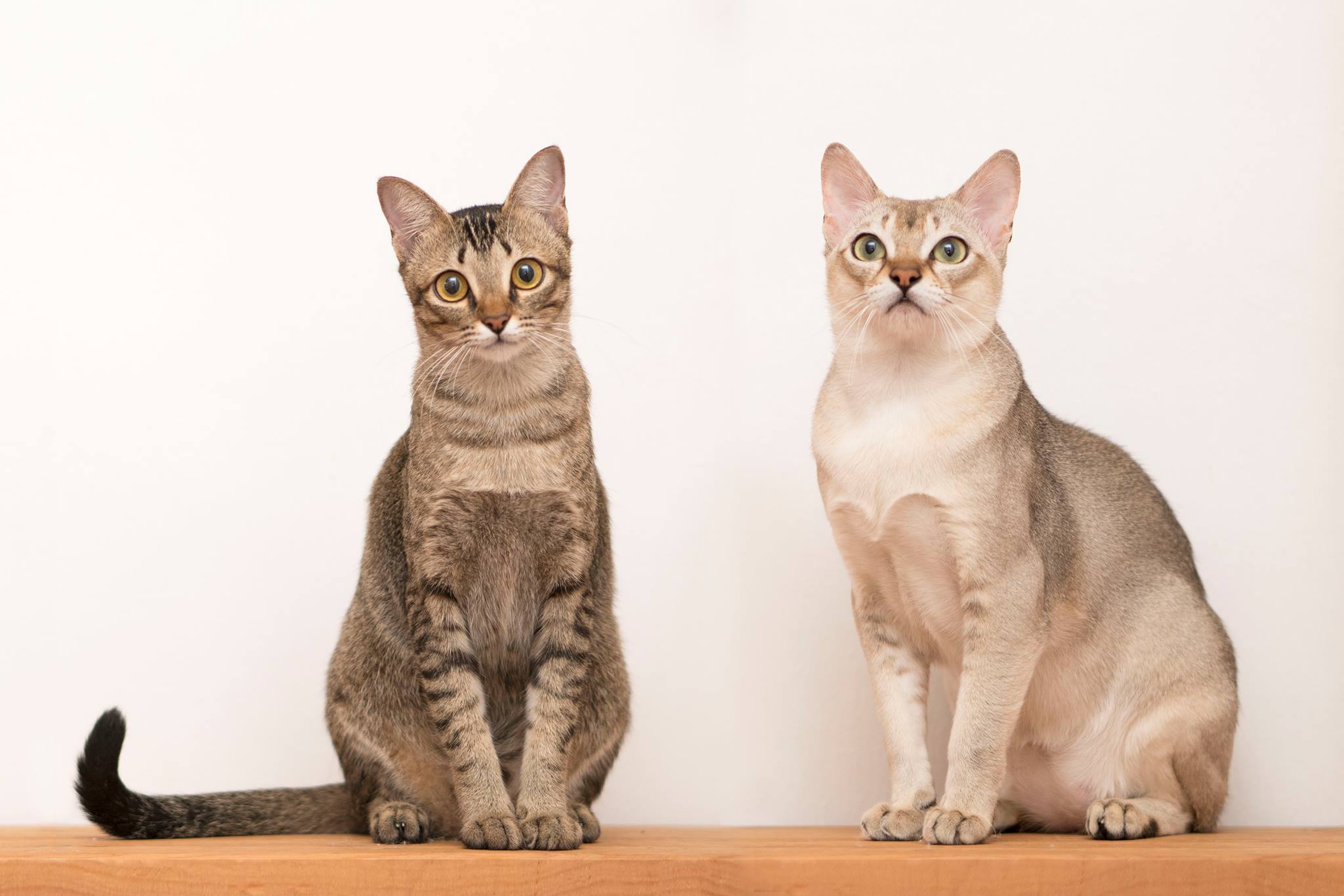
The Singapura is a medium-sized cat, typically weighing between 2–4 kg in adulthood — well-proportioned with a balanced, elegant silhouette.
Coat type: a sleek, close-lying short coat that is glossy and low-shedding. The breed appears in a diverse palette including Sepia Agouti (Brown Ticked Tabby), with each colour and pattern combination producing a subtly distinct look that makes every individual Singapura visually unique.
The Singapura is curious and playful in bearing, with a notably long lifespan of 9–15 yrs — a companion capable of sharing many meaningful years of your life.
Singapura Personality Profile
| Energy Level | ●●●●● |
| Affection | ●●●●● |
| Social Needs | ●●●●● |
| Intelligence | ●●●●○ |
| Vocalisation | ●●●○○ |
Originally from Singapore, the Singapura is a highly energetic and endlessly curious breed, forming intense bonds with family and strongly disliking extended alone time.
Singapuras are deeply affectionate cats that constantly seek out laps, cuddles, and warm bodies — a true "velcro cat" that shadows favourite humans from room to room. They communicate selectively — a soft meow here, a purr there — making their vocalisations feel meaningful rather than noisy.
Singapuras are exceptionally intelligent — they regularly figure out door handles, childproof latches, and puzzle feeders, and they thrive on trick training and interactive toys that challenge their nimble minds.
Known for being Curious, Playful, Affectionate, Active, Singapuras form deep, rewarding relationships with their families — bonds that grow richer with every passing year.
Grooming & Care Guide
| Grooming Needs | ●○○○○ |
| Shedding Level | ●●○○○ |
The Singapura is delightfully low-maintenance — a quick brush once a week is typically all that's needed to keep the coat looking its best, freeing up more time for play.
Shedding is minimal — an excellent trait for households with allergies or a strong preference for fur-free sofas.
Beyond coat care, establish a routine that includes weekly ear checks, regular dental hygiene (brushing or dental treats significantly reduce periodontal disease risk), and nail trims every three to four weeks. These small habits, consistently maintained, form the backbone of a long and healthy life for your Singapura.
Home Life & Compatibility
| Adaptability | ●●●●○ |
| Child Friendly | ●●●●○ |
| Dog Friendly | ●●●○○ |
The Singapura is exceptionally adaptable, thriving equally in compact city apartments and sprawling countryside homes, and adjusting to new environments, schedules, and family dynamics with impressive ease.
They are genuinely wonderful with children of all ages — patient, playful, and remarkably tolerant — making them one of the finest feline choices for busy family homes. With careful, gradual introductions, they can coexist peacefully with other household animals.
For cats spending long hours indoors, environmental enrichment is key — cat trees positioned at windows, rotating puzzle feeders, wand toys, and even bird-feeding stations outside provide vital mental stimulation and prevent the boredom that can lead to destructive behaviour.
Health & Longevity
| Lifespan | 9–15 yrs |
| Health Issues | ●●●○○ |
The Singapura enjoys generally good health, though like all breeds, benefits enormously from annual veterinary check-ups to catch any emerging issues at their most treatable early stage.
The Singapura typically lives 9–15 years — notably long-lived even by feline standards. A high-quality, age-appropriate diet, a stimulating indoor environment, and consistent preventive healthcare form the three pillars of feline longevity.
Keep a health record including vaccination history, parasite treatments, and vet visit notes. Watch for early warning signs: unexplained weight changes, shifts in water intake, altered litter box habits, or changes in social behaviour — early detection transforms outcomes.
Expert Breed Profile
About the Breed
If good things come in small packages, this endearingly petite cat just might be one of the best. One of the smallest of all pedigreed cats, the Singapura is active, affectionate, and extremely addictive. Owners describe the look in their large, expressive eyes as imploring—when a Singapura looks up at you, it seems to be saying, “please” in an irresistibly charming way. Small in stature but greatly gifted when it comes to determination, these cats have a low-key way of achieving exactly what they want. In fact, they take control of their environments so easily and effortlessly that owners rarely notice or object.
Breed History
Classified as a natural breed, and considered a “living national monument” in Singapore, these brown cats with ticked-tabby coats are believed to have originated from street cats and are called “Kucinta, the Love Cat” in their homeland. “Singapura” is the Malay name for the Anglicized “Singapore.” The founders of the breed, Hal and Tommy Meadow, were Americans who had been working in Singapore; when they returned to the U.S. in 1975, five Singapuras came with them. A sixth was imported from Singapore in 1980 and from this small beginning, a breed was born. Cat lovers were quickly captivated by the exotic charm of these diminutive felines, and CFA accepted them for registration in 1981. Championship status was achieved in 1988.
Character & Temperament
Extroverted, curious, and very playful, the Singapura is an intelligent cat that feels compelled to investigate every aspect of its environment, especially whatever is taking up your attention at any given moment. Obviously, you require feline assistance, so your Singapura will be there to help you cook dinner, type on the computer, make the bed, and then cuddle under the covers with you. Confident and outgoing in familiar territory, a Singapura may become wary if something substantial changes. Owners should give the cat time to adapt and gently reassure it that everything is still okay. Clearly, this is an active, people-oriented cat that does not lie on the couch and look decorative. The Singapura’s love of play continues well into adulthood and its energy and activity level rarely flag with age. They are relatively quiet cats who do best in a quiet environment, but should they decide to speak up about something, their voices can be surprisingly loud.
Physical Appearance
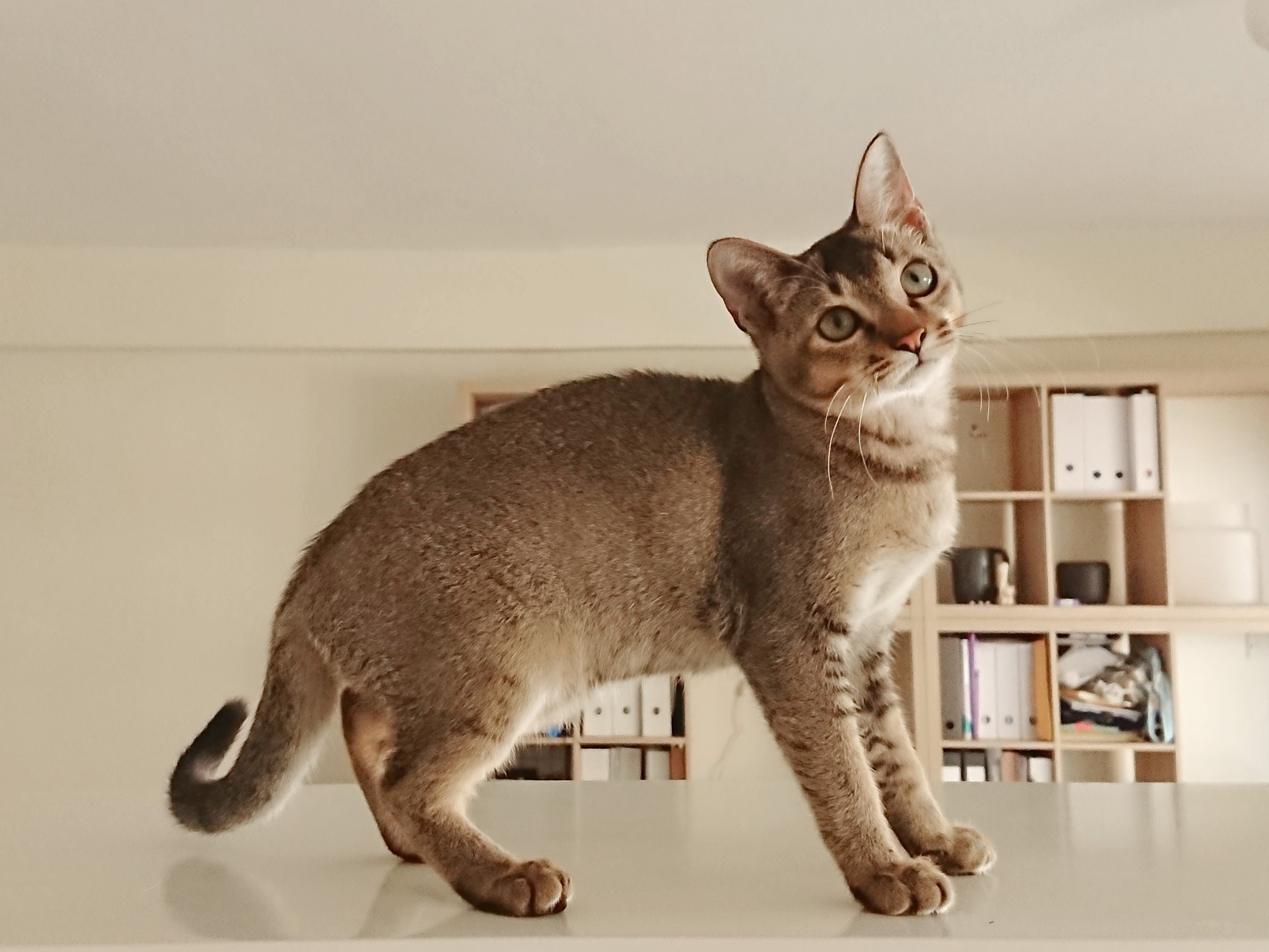
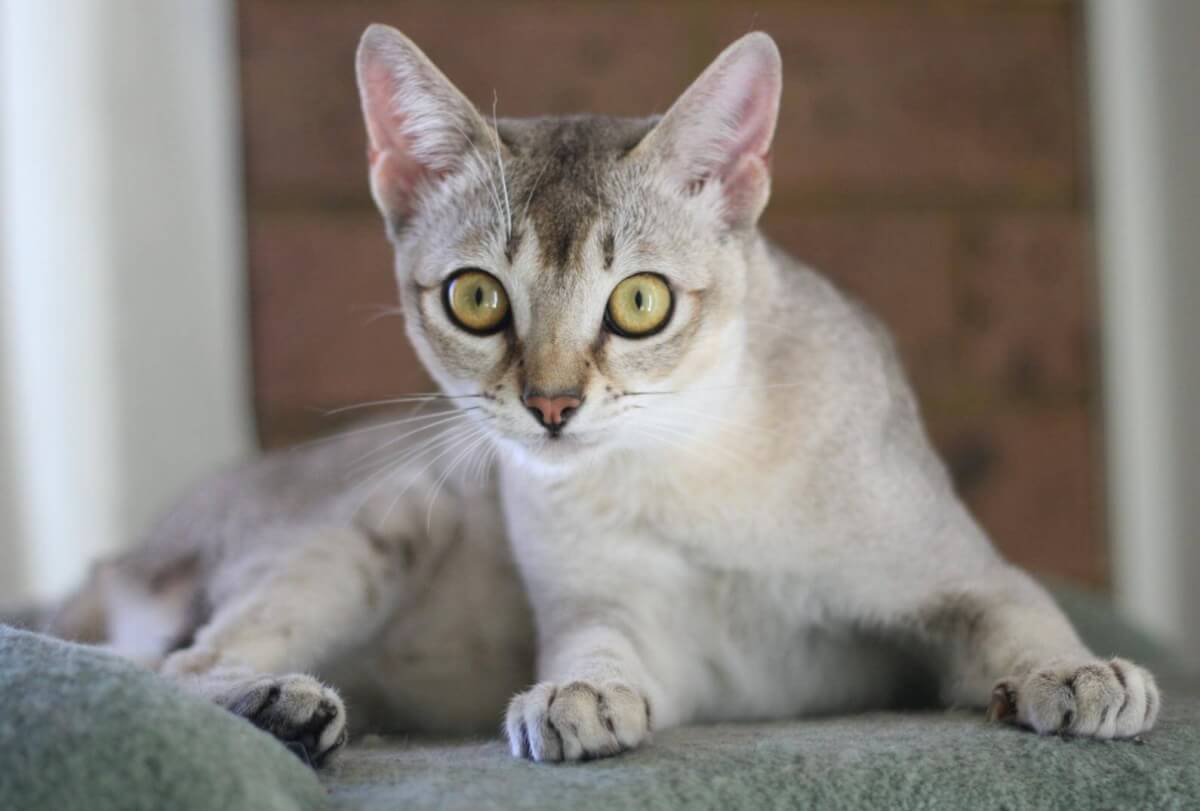
Registered and shown in only one color, which is called sepia agouti, Singapuras have multiple bands of color on each hair shaft, an effect that makes their coats appear to sparkle in the sunlight. Although small, these cats are solid, muscular and strong. Their heads are rounded and medium in length, with noticeably large ears and dramatic, almond-shaped eyes that may be hazel, green, or yellow. Facial markings, particularly the “cheetah lines,” which extend down from the inner corner of the eyes alongside the nose bridge, add to the exotic look. Adult males range from 6 to 7 pounds in weight, with females closer to 4 or 5 pounds.
Grooming
The short, close-lying coat of a Singapura does not shed heavily and needs only minimal grooming. A weekly combing is recommended to remove dead hair and help condition the coat; it will also be a bonding experience for you and the cat. Bathing should not be needed unless you plan to show your cat. If this is the case, consult your breeder for product recommendations and bathing procedures as human shampoos should not be used on cats.
Living with This Breed
Given their street-cat ancestry, most Singapuras are vigorous and healthy. Very few health problems have been recorded and breeders regularly perform genetic testing to screen for problems that might be passed on to offspring, removing carrier cats from the breeding program. Not all conditions can be detected this way, however, so you may want to talk to your breeder about any history of progressive retinal atrophy (which can cause blindness) in the lines. Most breeders are committed to managing the health of their breeding cats and kittens, and will help you learn how to care for your cat to ensure a long life.
Breed Overview
At just 4–8 pounds, the Singapura is the smallest domestic cat breed, but their personality is anything but tiny. Lively, curious, and highly extroverted, these pint-size cats often have twice the energy of many larger cat breeds. The Singapura is said to have first been brought from Singapore to the U.D. in 1975 by American breeders Hal and Tommy Meadow. However, the breed's origins are debated: The Singapore Tourism Board speculates that native Singapore street cats were taken to the U.S. earlier, where they were crossbred with Abyssinian and Burmese cats to create today's tiny, tick-coated breed.
Care Guide
Singapura cats are tiny, weighing just 4–8 pounds and standing 6–8 inches tall at the shoulder. Females are typically smaller than males. Rarely seeking solitude, the Singapura doesn’t just stay small—they retain a kitten-like energy, which can be a handful for some cat parents. They’re not shy about literally headbutting their way into your daily activities. However, with plenty of mental stimulation, exercise, play, and cat-friendly vertical spaces to climb, this lively little breed can be an affectionate and endlessly entertaining companion. Their fur has sepia agouti ticking, which means each individual hair has two shades: ivory at the base of the hair and brown toward the tip. This makes the tiny Singapura look a bit like a miniature cougar. But with eyes as large as saucers, you could never mistake them for anything but the Singapura cat breed.