Origin
United Kingdom
Lifespan
11–14 years
Weight
3–6 kg
Group
Shorthair
Personality
Colors & Patterns
White · Black · Blue · Red · Cream · Silver · Tabby · Bicolor
Scottish Fold
About This Breed
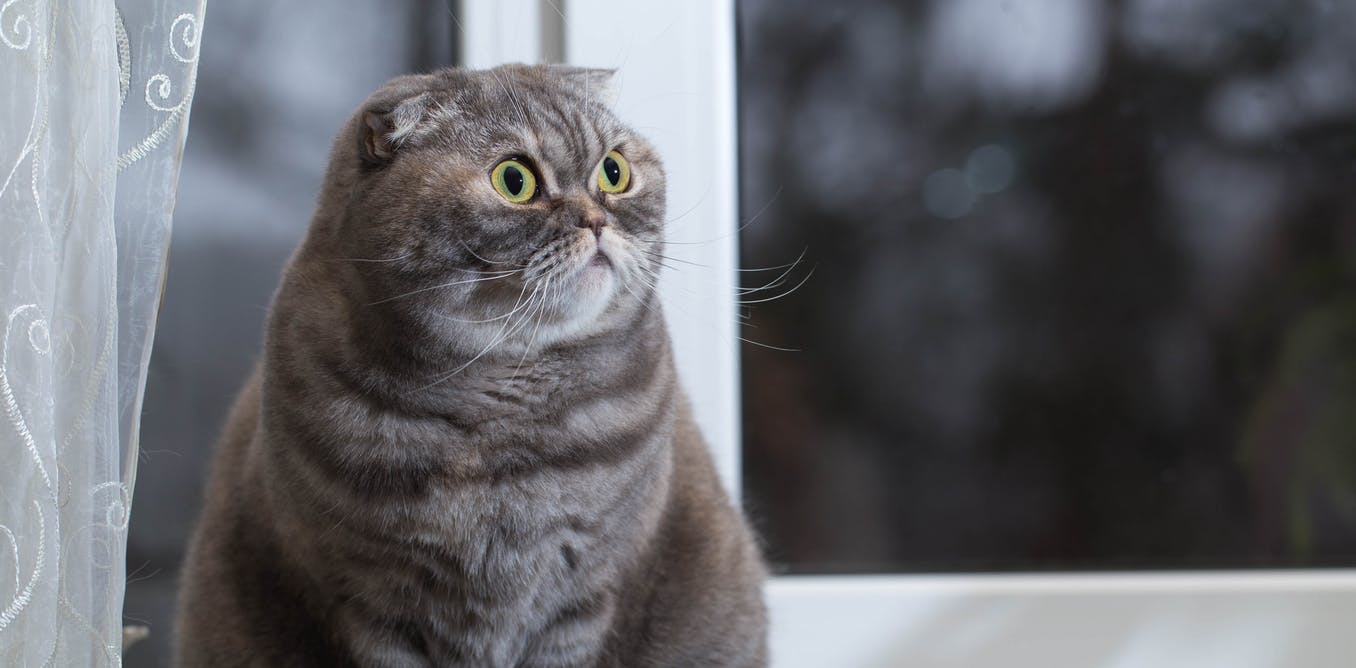
The Scottish Fold is a breed of domestic cat with a natural dominant gene mutation that affects cartilage throughout the body, causing the ears to fold forward and downward. The original Scottish Fold was a white barn cat named Susie, who was found at a farm near Coupar Angus in Perthshire, Scotland, in 1961. Their distinctive folded ears give them an owl-like appearance. They are known for sitting in a unique 'Buddha pose' with their belly up.
Characteristics
Getting to Know the Scottish Fold
Origin & History
The Scottish Fold's development is closely tied to the rich tradition of British cat fancying. The world's first modern cat show was held at London's Crystal Palace in 1871 — an event that transformed casual cat keeping into a structured hobby and prompted British breeders to standardise and promote their native breeds, including the Scottish Fold.
Through the efforts of successive generations of dedicated breeders, the Scottish Fold's distinctive appearance and temperament were gradually standardised and formally accepted by the world's leading feline registries. The breed is now a familiar presence at international cat shows and commands a devoted following worldwide.
Size & Physical Traits
| Weight | 3–6 kg |
| Lifespan | 11–14 yrs |
| Size | medium-to-large |
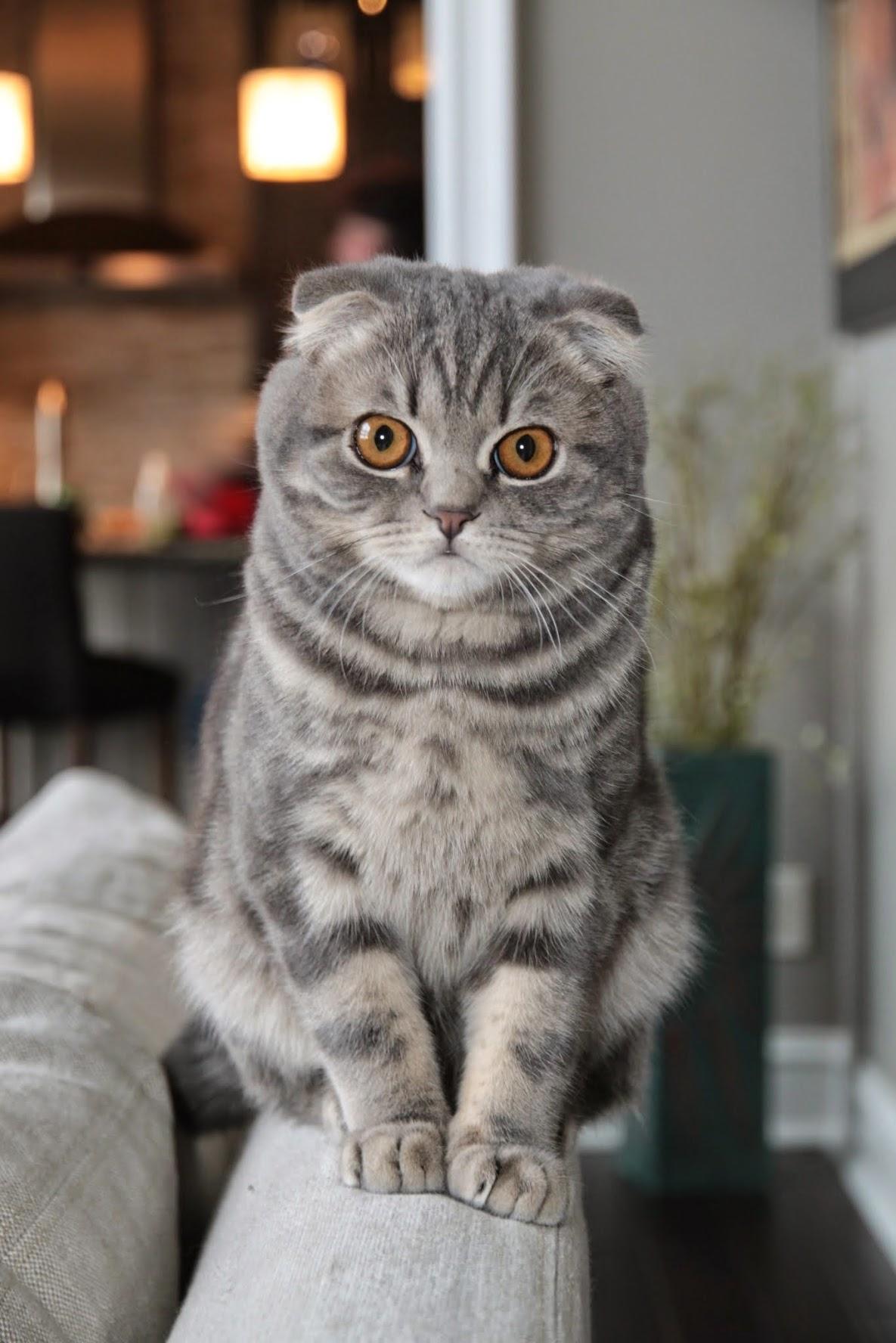
The Scottish Fold is a medium-to-large cat, typically weighing between 3–6 kg in adulthood — well-proportioned with a balanced, elegant silhouette.
Coat type: a sleek, close-lying short coat that is glossy and low-shedding. The breed appears in a diverse palette including White · Black · Blue · Red · Cream · Silver · Tabby · Bicolor, with each colour and pattern combination producing a subtly distinct look that makes every individual Scottish Fold visually unique.
The Scottish Fold is sweet and gentle in bearing, with a typical lifespan of 11–14 yrs — a companion capable of sharing many meaningful years of your life.
Scottish Fold Personality Profile
| Energy Level | ●●●○○ |
| Affection | ●●●●● |
| Social Needs | ●●●●○ |
| Intelligence | ●●●○○ |
| Vocalisation | ●●○○○ |
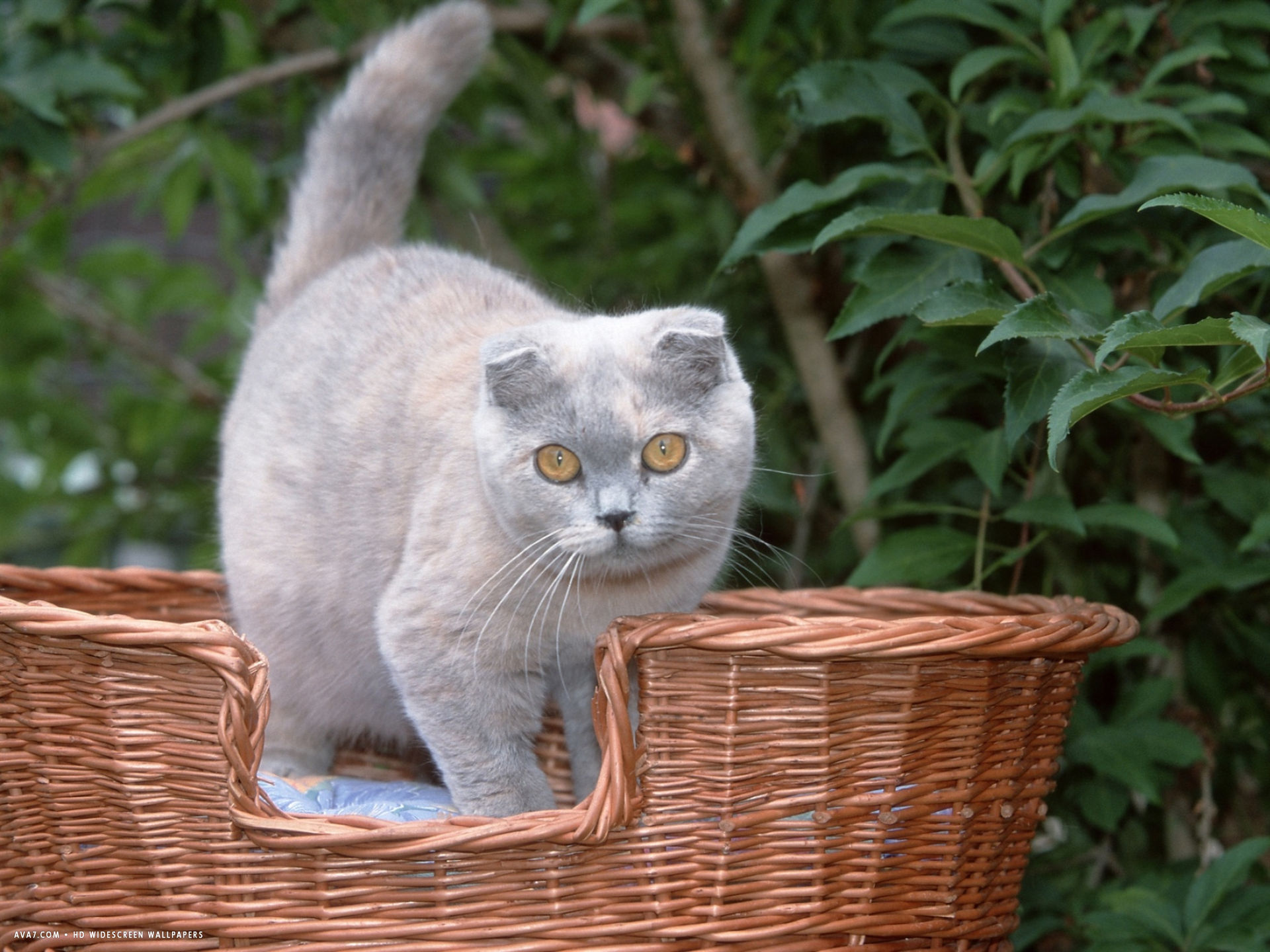
Originally from United Kingdom, the Scottish Fold is a moderately active, balancing playtime with peaceful rest breed, forming intense bonds with family and strongly disliking extended alone time.
Scottish Folds are deeply affectionate cats that constantly seek out laps, cuddles, and warm bodies — a true "velcro cat" that shadows favourite humans from room to room. They are remarkably quiet cats, rarely demanding attention through sound, which makes them ideal companions in noise-sensitive environments.
Scottish Folds are bright and responsive, picking up new behaviours readily when rewarded with treats and praise.
Known for being Sweet, Gentle, Adaptable, Playful, Scottish Folds form deep, rewarding relationships with their families — bonds that grow richer with every passing year.
Grooming & Care Guide
| Grooming Needs | ●●○○○ |
| Shedding Level | ●●●○○ |
The Scottish Fold is delightfully low-maintenance — a quick brush once a week is typically all that's needed to keep the coat looking its best, freeing up more time for play.
Shedding is moderate and manageable; a consistent brushing routine keeps loose hair from accumulating on furniture and clothing.
Beyond coat care, establish a routine that includes weekly ear checks, regular dental hygiene (brushing or dental treats significantly reduce periodontal disease risk), and nail trims every three to four weeks. These small habits, consistently maintained, form the backbone of a long and healthy life for your Scottish Fold.
Home Life & Compatibility
| Adaptability | ●●●●● |
| Child Friendly | ●●●●○ |
| Dog Friendly | ●●●●○ |
The Scottish Fold is exceptionally adaptable, thriving equally in compact city apartments and sprawling countryside homes, and adjusting to new environments, schedules, and family dynamics with impressive ease.
They are genuinely wonderful with children of all ages — patient, playful, and remarkably tolerant — making them one of the finest feline choices for busy family homes. They also gel beautifully with other cats and dogs, making multi-pet households a harmonious and lively affair.
For cats spending long hours indoors, environmental enrichment is key — cat trees positioned at windows, rotating puzzle feeders, wand toys, and even bird-feeding stations outside provide vital mental stimulation and prevent the boredom that can lead to destructive behaviour.
Health & Longevity
| Lifespan | 11–14 yrs |
| Health Issues | ●●●●○ |
The Scottish Fold is predisposed to certain hereditary health conditions — thorough research before adopting and choosing a breeder who screens for these issues is strongly advisable. Bi-annual veterinary check-ups rather than annual ones are recommended.
The Scottish Fold typically lives 11–14 years. A high-quality, age-appropriate diet, a stimulating indoor environment, and consistent preventive healthcare form the three pillars of feline longevity.
Keep a health record including vaccination history, parasite treatments, and vet visit notes. Watch for early warning signs: unexplained weight changes, shifts in water intake, altered litter box habits, or changes in social behaviour — early detection transforms outcomes.
Expert Breed Profile
About the Breed
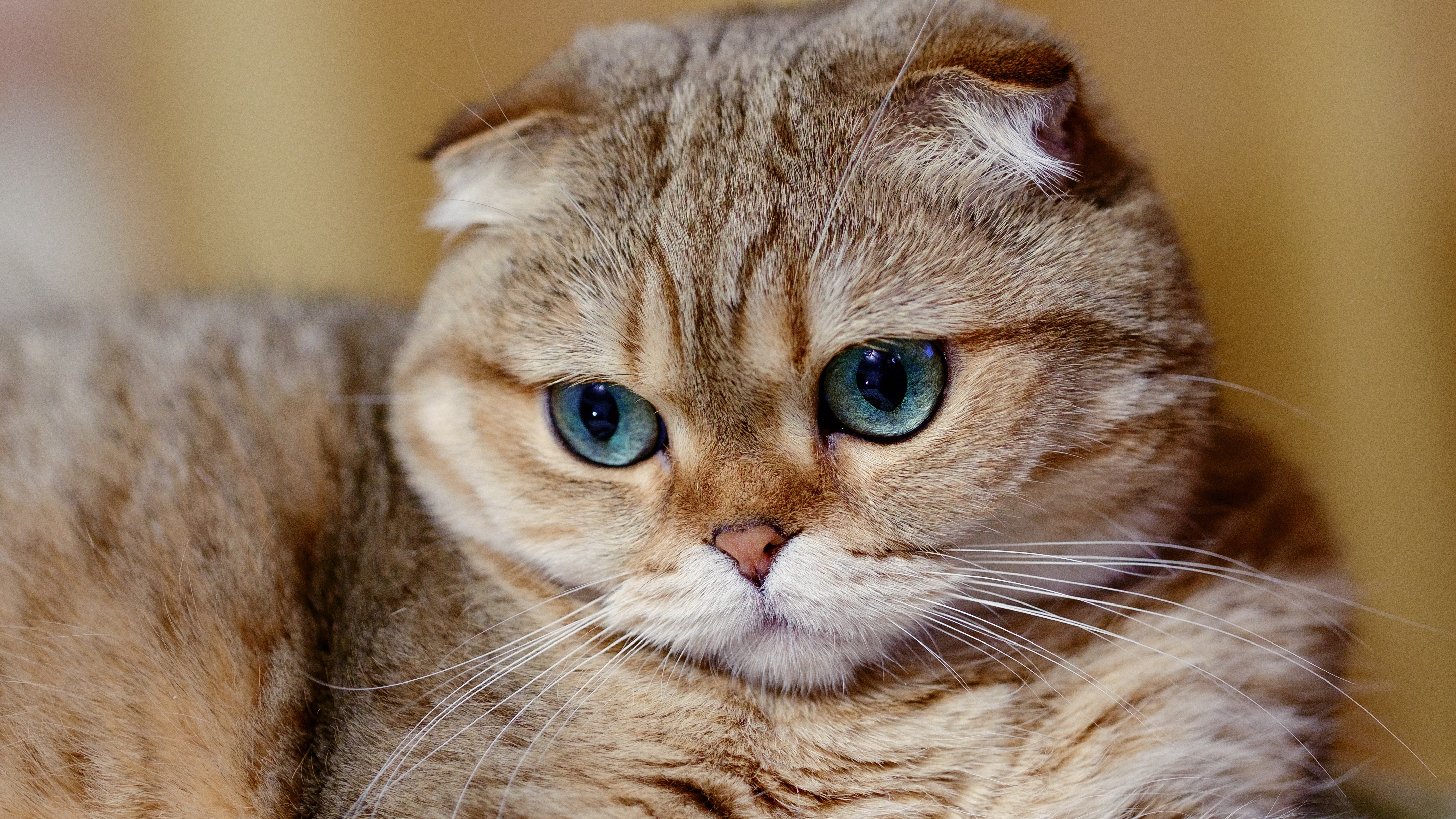
Who would have thought that one humble Scottish farm cat could become the foundation of one of the cat fancy’s most beguiling breeds? Loving and calm, the Scottish Fold personality is as endearing as its unique look. Without the distraction of upright ears, these cats’ round, soulful eyes are so dominant that they practically overwhelm you with their owl-like charm. The sweet, open expression does the rest; one look, and most people are in love. Even the straight-eared version of this breed—recently elevated to championship status in CFA—is equally appealing. And with long-haired and short-haired cats to choose from, who could ask for more?
Breed History
In 1961, a shepherd named William Ross spotted the first Scottish Fold, a copper-eyed white female named Susie, at a farm in the Tayside region of Scotland. Susie’s folded ears and unique look captured Ross’s heart and he asked for one of her kittens. Susie only produced one litter, so it was actually her daughter Snooks who became the foundation queen. Bred to a domestic male and then to a British Shorthair, she produced folded-ear kittens with both, and established the Scottish Fold as a breed. The folded ears are produced by a dominant gene that is considered a spontaneous mutation. The shorthaired Fold was granted championship status by CFA in 1978. Longhaired Folds achieved the same status in 1992, when the breed was separated into Shorthair and Longhair divisions. Then, in 2022, straight-eared cats were also accepted, so the breed now has four divisions.
Character & Temperament
Scottish Folds are comfortable, charming homebodies who enjoy but do not crave human interaction. They are quiet but not placid, and will readily engage in a game of fetch, however, you can trust them not to start one at three o’clock in the morning. Sometimes reserved with strangers and other cats—who may consider their folded ears a sign of hostility—Folds have affectionate natures that will blossom when given the right kind of respectful, loving attention. They are quite intelligent and can be trained to do basic tricks. Cuddly and loving with their special people, Folds have very even temperaments and are usually patient with children. They are friendly, curious cats who may sit up straight like a prairie dog if something new and intriguing captures their attention. People-oriented, Folds will follow you around the house engaging in quiet, polite conversation, but will rarely get in the way of your daily activities. However, they do not do well being left alone for long periods of time.
Physical Appearance
“Round” is the word most often used to describe the Scottish Fold. Medium in size, they have strikingly round heads due to the caplike fit of the folded ears. The eyes are very round, bright and clear. Even the folded ears (which have no effect on the cat’s hearing) should have rounded tips. The neck is short and blends into a well-padded body with strong, muscular legs. The tail should be medium to long but in proportion to the body. Flexibility of the tail should be gently, but frequently evaluated as signs of stiffness can be an early indication of other health problems.
Grooming
Scottish Folds do not require any special grooming. While they shed, their otherwise lush coats only require a weekly combing to keep it in good condition. Longer-haired versions of the Scottish fold are almost as easy to maintain, although they’ll require more frequent attention to prevent tangles and matting. Scottish Folds shed year-round, with heavier shedding periods during the spring and fall. If you do plan to bathe your cat, consult your breeder for the right products to use; every coat is slightly different.
Living with This Breed
Responsible Fold breeders are careful to only breed fold-eared cats to straight-eared cats in order to minimize arthritic and bone conditions that may occur in this breed; DNA testing is also of paramount importance in order to confirm that each possible pairing is appropriate. A well-bred Scottish Fold will have a flexible tail and no problems with its gait. Most breeders are committed to managing the health of their breeding cats and kittens, and will help you learn how to care for your cat to ensure it has a long life.
Breed Overview
As you might have guessed, round-faced Scottish Folds—lovingly referred to as Foldies—originated in Scotland. Standing 8–10 inches tall and weighing up to 13 pounds, they’re stocky cats with lots of love to give. In 1961, a spontaneous genetic mutation established this breed of cats with folded ears. “These folded ears give them a unique appearance often seen as cute,” says Dr. Primrose Moss, VetMB, MRCVS, a UK-based small-animal veterinarian. However, there’s more to consider than cute looks when adding a new pet to the family.
Care Guide
If you’re a fan of Taylor Swift and her Scottish Fold cats, Meredith Grey and Olivia Benson, you may be familiar with their daily adventures. But what you might not know, Moss says, is that Scottish Fold cats require caregivers who can understand a cat’s body language and notice small signs of discomfort: The folded ears of these celebrity cats also come with joint and cartilage problems. However, these cats are incredibly popular due to their genuinely sweet and gentle temperament. They thrive in houses or apartments, and Scottish Folds happily share their abode with other pets and/or children.