Origin
United Kingdom
Lifespan
9–15 years
Weight
2–5 kg
Group
Rex
Personality
Colors & Patterns
Various Colors · Tabby · Pointed · Solid · Bicolor
Devon Rex
About This Breed
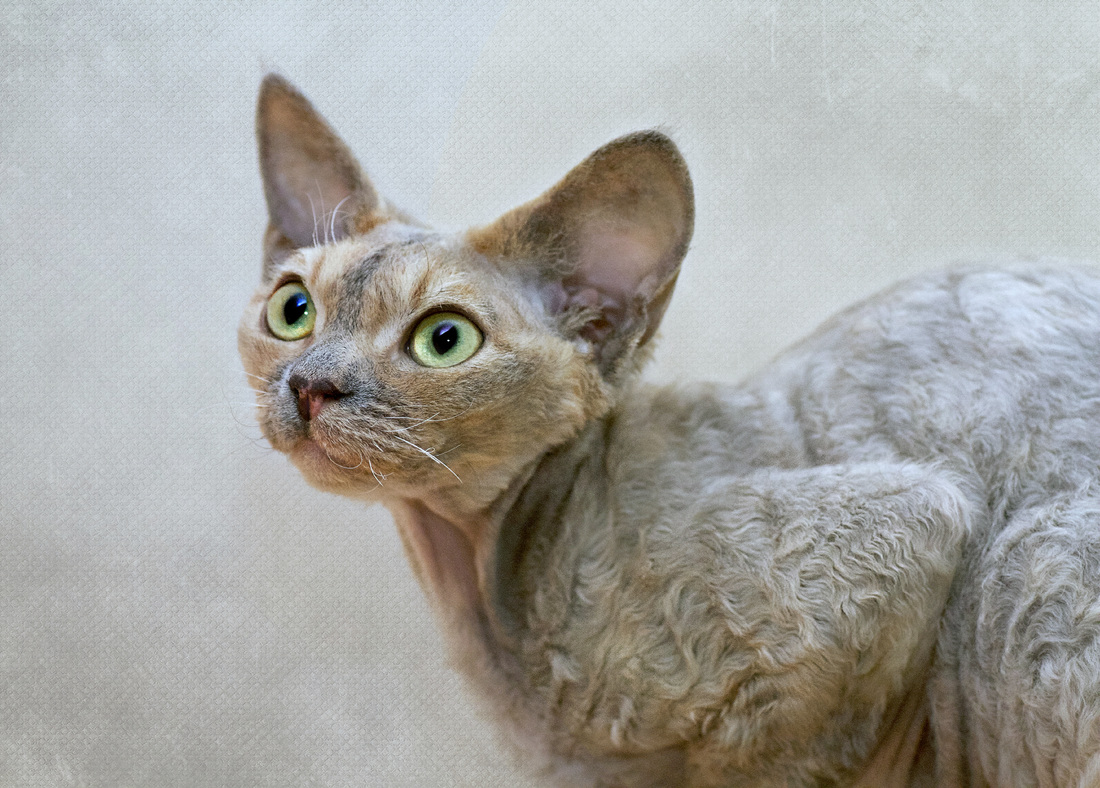
The Devon Rex is a breed of intelligent, short-haired cat that emerged in England during the late 1950s. It is known for its slender body, wavy coat, and large ears. They are sometimes called 'pixie cats' or 'alien cats' due to their large eyes and elf-like appearance. Devon Rex cats are very playful and mischievous, retaining their kitten-like personality throughout life. They love being with people and are known to perch on their owner's shoulder.
Characteristics
Getting to Know the Devon Rex
Origin & History
The Devon Rex's development is closely tied to the rich tradition of British cat fancying. The world's first modern cat show was held at London's Crystal Palace in 1871 — an event that transformed casual cat keeping into a structured hobby and prompted British breeders to standardise and promote their native breeds, including the Devon Rex.
As a breed born from a spontaneous genetic mutation, the Devon Rex has a relatively short but dynamic history. Dedicated breeders worked swiftly to stabilise the mutation through careful selective breeding, and within decades had produced the consistent, recognised breed that exists today.
Size & Physical Traits
| Weight | 2–5 kg |
| Lifespan | 9–15 yrs |
| Size | medium-sized |
The Devon Rex is a medium-sized cat, typically weighing between 2–5 kg in adulthood — well-proportioned with a balanced, elegant silhouette.
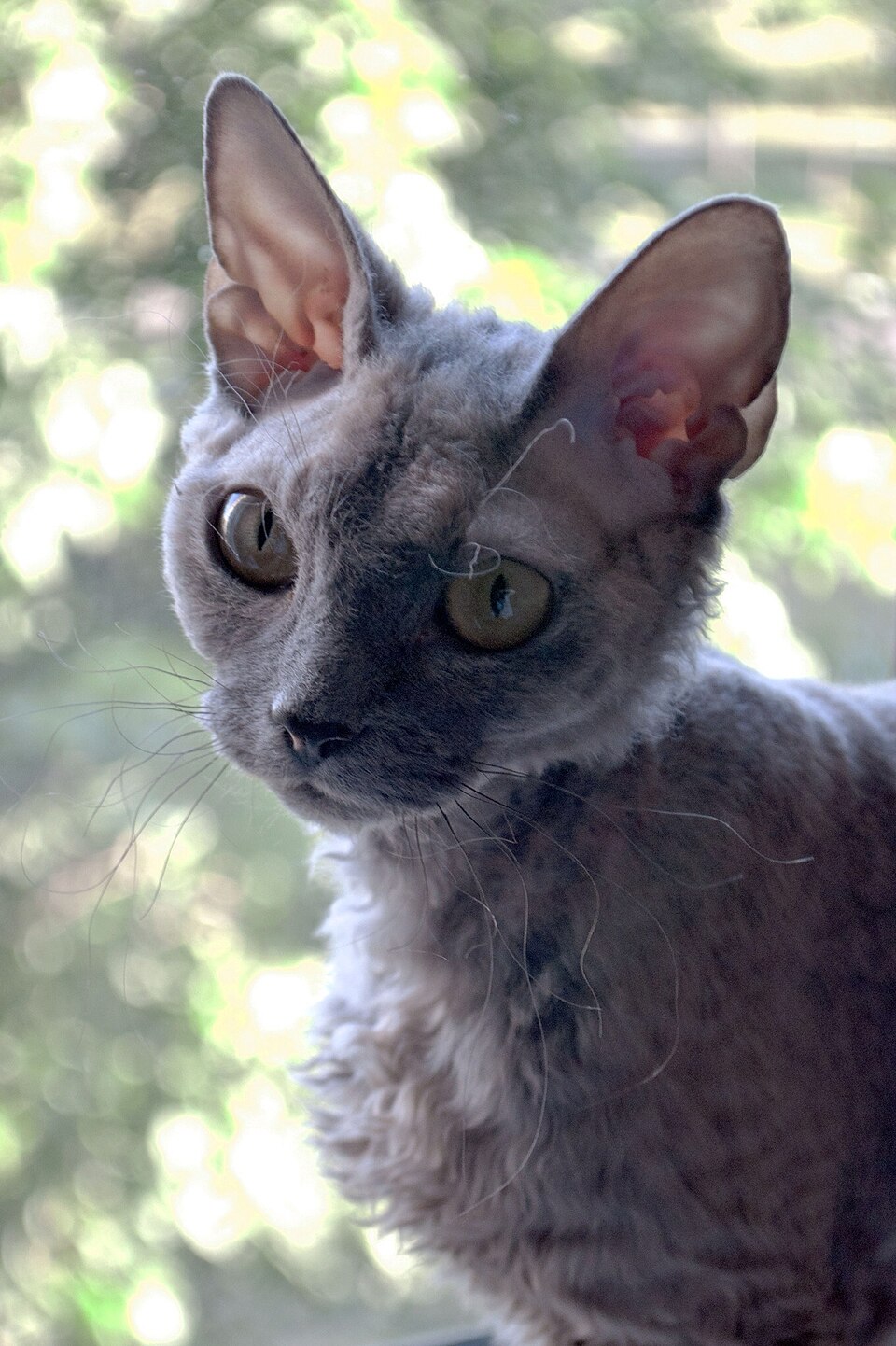
Coat type: a uniquely soft, wavy or curly coat caused by a natural mutation. The breed appears in a diverse palette including Various Colors · Tabby · Pointed · Solid · Bicolor, with each colour and pattern combination producing a subtly distinct look that makes every individual Devon Rex visually unique.
The Devon Rex is active and social in bearing, with a notably long lifespan of 9–15 yrs — a companion capable of sharing many meaningful years of your life.
Devon Rex Personality Profile
| Energy Level | ●●●●● |
| Affection | ●●●●● |
| Social Needs | ●●●●● |
| Intelligence | ●●●●● |
| Vocalisation | ●●●○○ |
Originally from United Kingdom, the Devon Rex is a highly energetic and endlessly curious breed, forming intense bonds with family and strongly disliking extended alone time.
Devon Rexs are deeply affectionate cats that constantly seek out laps, cuddles, and warm bodies — a true "velcro cat" that shadows favourite humans from room to room. They communicate selectively — a soft meow here, a purr there — making their vocalisations feel meaningful rather than noisy.
Devon Rexs are exceptionally intelligent — they regularly figure out door handles, childproof latches, and puzzle feeders, and they thrive on trick training and interactive toys that challenge their nimble minds.
Known for being Active, Social, Playful, Naughty, Devon Rexs form deep, rewarding relationships with their families — bonds that grow richer with every passing year.
Grooming & Care Guide
| Grooming Needs | ●●○○○ |
| Shedding Level | ●○○○○ |
The Devon Rex is delightfully low-maintenance — a quick brush once a week is typically all that's needed to keep the coat looking its best, freeing up more time for play.
Shedding is minimal — an excellent trait for households with allergies or a strong preference for fur-free sofas.
The Devon Rex's delicate curly coat benefits from gentle handling — avoid stiff brushes and excessive combing that can break the fine hair structure; a soft rubber grooming glove works beautifully.
Beyond coat care, establish a routine that includes weekly ear checks, regular dental hygiene (brushing or dental treats significantly reduce periodontal disease risk), and nail trims every three to four weeks. These small habits, consistently maintained, form the backbone of a long and healthy life for your Devon Rex.
Home Life & Compatibility
| Adaptability | ●●●●● |
| Child Friendly | ●●●●● |
| Dog Friendly | ●●●●● |
The Devon Rex is exceptionally adaptable, thriving equally in compact city apartments and sprawling countryside homes, and adjusting to new environments, schedules, and family dynamics with impressive ease.
They are genuinely wonderful with children of all ages — patient, playful, and remarkably tolerant — making them one of the finest feline choices for busy family homes. They also gel beautifully with other cats and dogs, making multi-pet households a harmonious and lively affair.
For cats spending long hours indoors, environmental enrichment is key — cat trees positioned at windows, rotating puzzle feeders, wand toys, and even bird-feeding stations outside provide vital mental stimulation and prevent the boredom that can lead to destructive behaviour.
Health & Longevity
| Lifespan | 9–15 yrs |
| Health Issues | ●●●○○ |
The Devon Rex enjoys generally good health, though like all breeds, benefits enormously from annual veterinary check-ups to catch any emerging issues at their most treatable early stage.
The Devon Rex typically lives 9–15 years — notably long-lived even by feline standards. A high-quality, age-appropriate diet, a stimulating indoor environment, and consistent preventive healthcare form the three pillars of feline longevity.
Keep a health record including vaccination history, parasite treatments, and vet visit notes. Watch for early warning signs: unexplained weight changes, shifts in water intake, altered litter box habits, or changes in social behaviour — early detection transforms outcomes.
Expert Breed Profile
About the Breed
If you could cross a cat and an elf, you’d most likely have a Devon Rex. It’s virtually impossible to discuss these charming, wavy-haired wonders without using the words “elfin” or “pixie.” So striking and unusual that at first glance, people wonder if they are truly looking at a cat. Devon Rex are adorably cute, delightfully silly, and pure fun from beginning to end. Intensely loyal and loving, they become deeply attached to their owners and dislike being left alone for long periods. This is definitely a breed for someone who is comfortable being owned by a cat, not the other way around.
Breed History
In 1959, a single curly-haired male kitten turned up in a litter born in a garden in Devon, England. The kitten’s unusual appearance, amusing antics and loving nature earned him a home with Beryl Cox, who named him Kirlee. At first, Kirlee was considered to be another example of the Cornish Rex mutation. Test breedings proved this theory to be completely incorrect. So, Kirlee was bred to his own offspring to produce more wavy-coated kittens—a very different look from the tighter curl of the Cornish Rex coat. The development of the breed moved forward as Kirlee’s progeny were out-crossed with several other breeds over the years. Is it any wonder that Devons offer one of the broadest variety of colors and patterns of any breed known today?
Character & Temperament
Part court jester, part soulmate, Devons seek to be all things to all people and are always eager to please. Very intelligent cats, they learn to respond to their names, follow their people everywhere in the house, and often snuggle up next to them in bed. Fascinated by their owners’ every activity, they will often seek to provide their own special type of assistance; don’t be surprised if your Devon tries to join you in the shower or falls into the bathtub with you. Devons have a robust appetite and some may have exotic tastes; fruit and vegetables may be as appealing as chicken or fish. They are talkative but not noisy; their conversation consists of soft chirps, trills, and peeps along with contented purrs. Every guest to the home is a potential new friend who must be made welcome. They readily accept dogs or other animals as companions, playmates or pillows, and get along very well with children, tolerating dress-up or tea-party games with equanimity.
Physical Appearance
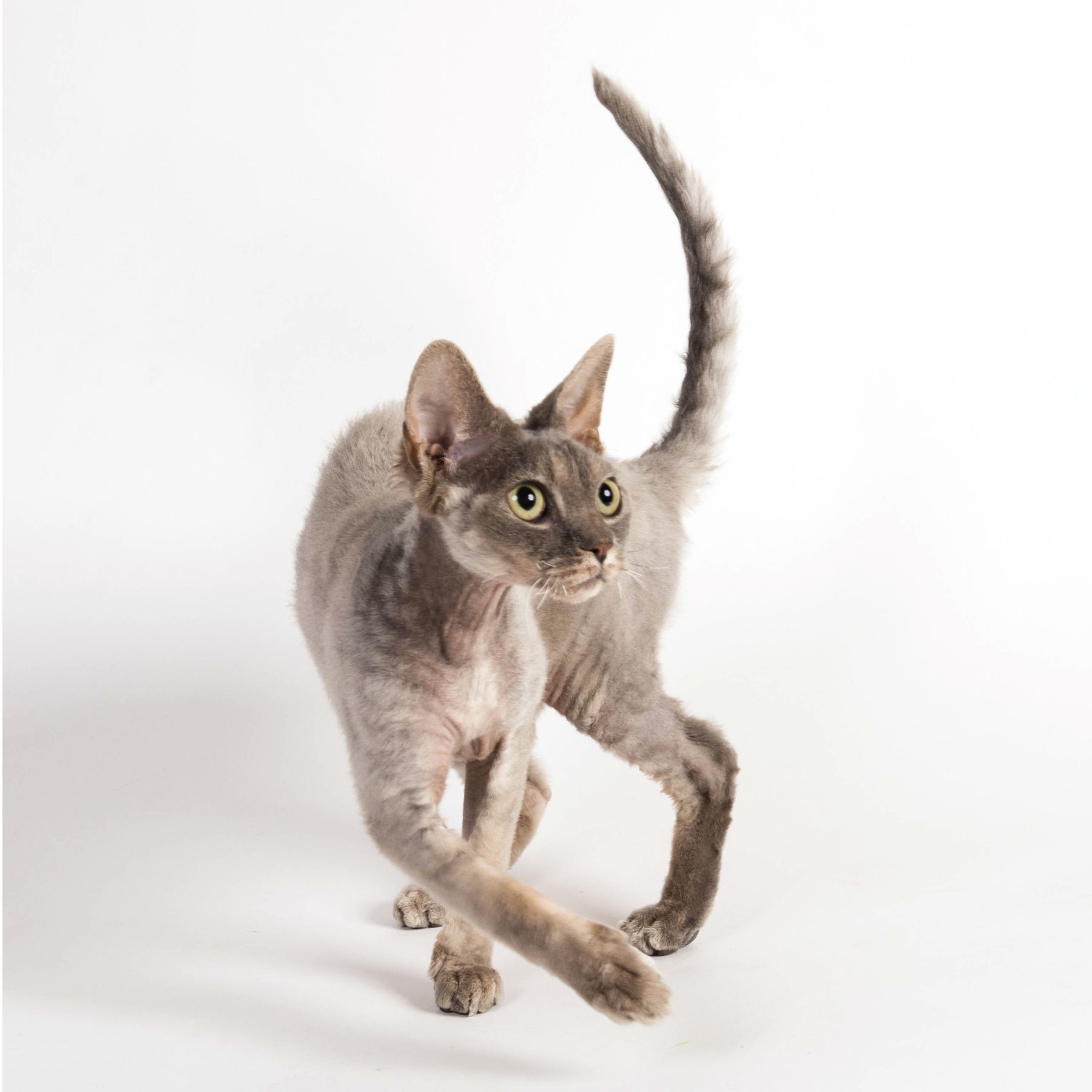
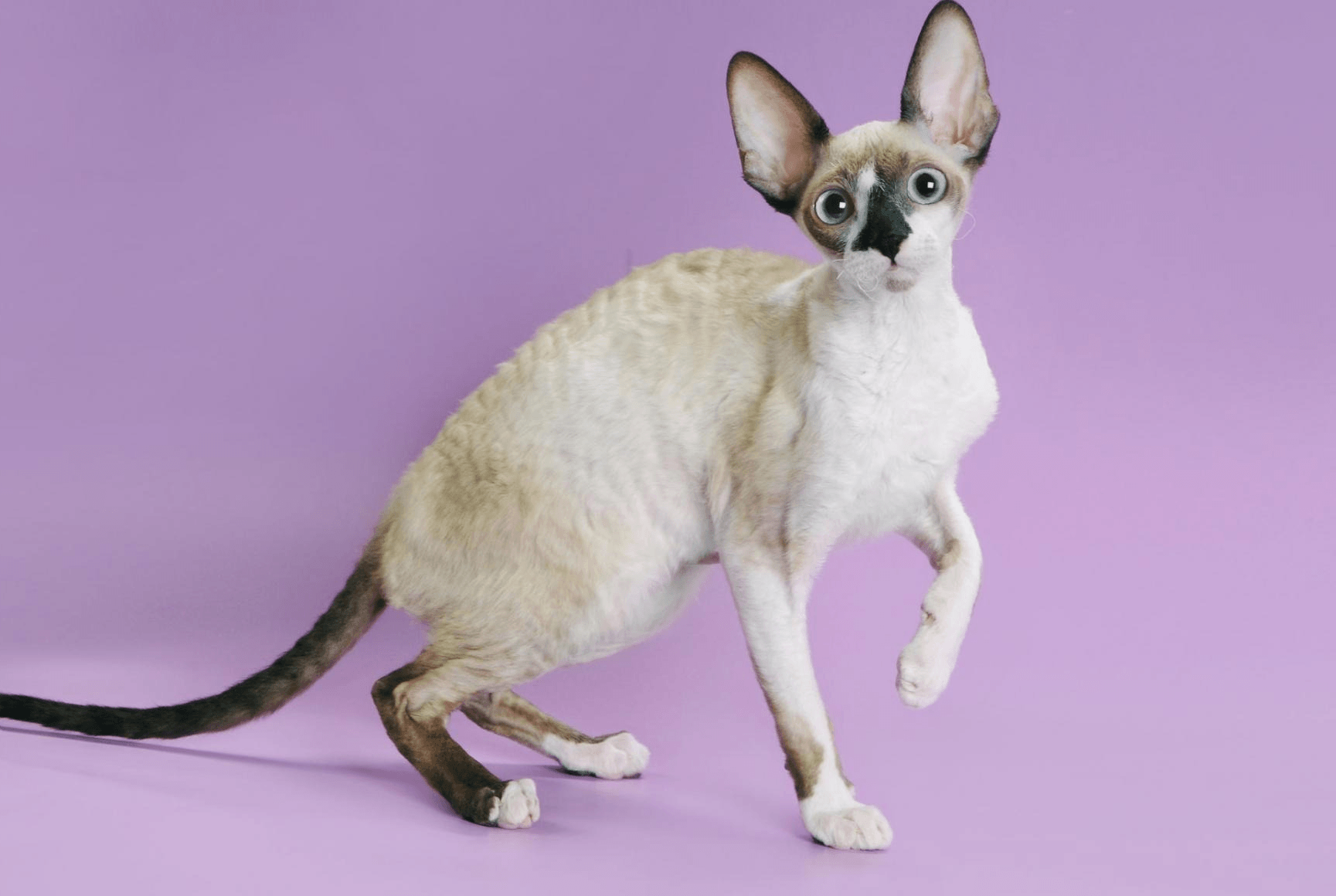
With large expressive eyes, large ears set low on the side of their head, wide cheekbones and a mischievous expression, the head of a Devon Rex captures your attention immediately, even before you feel the gentle waves and tissue-soft texture of the curly coat. Eyebrows and whiskers are also curly but fragile, and may break off, leaving only bent stubs. Small- to medium-sized cats, their bodies have a surprising heft and muscularity that may seem at odds with their elfin appearance. The chest is broad, the neck slender, and the front legs are often held in a “bulldog” stance. Typical adult weights range from six to nine pounds; males may be somewhat larger.
Grooming
Unlike the Cornish Rex, which has no outer guard hairs in its coat, Devons have some guard hairs that are very sparse, short, and rexed. This creates a coat that has an open wave and varies in density, texture, and length, but may also be somewhat fragile, leading to occasional bare or “sueded” areas. While all cats shed, Devons certainly shed less than most; they are easy-care, wash-and-wear cats that may be well tolerated by those sensitive to cats. Contrary to popular belief, though, they are not hypoallergenic.
Living with This Breed
Having ranked among CFA’s top ten breeds for several years, Devon Rex have recently been named the most popular of all shorthaired breeds (based on CFA registration statistics). With their varied genetic background, you would expect to find few health concerns; nevertheless, genetic testing is essential for breeders because of the high incidence of blood type B in the gene pool. If an “A” male is bred to a “B” female, parental blood type incompatibilities can result in the death of the kittens unless they can be initially hand-raised.
Breed Overview
Have you heard of the curly-coated rex cats? Surprisingly, each feline in the rex cat breed family, which includes the Cornish Rex, Devon Rex, and Selkirk Rex, is unrelated. "Each rex is a completely different breed that developed independently from different spontaneous mutations," says all-breed cat judge Teresa Keiger. While every cat’s personality is different, the Devon Rex stands out among the rex breeds as a particularly people-oriented and friendly feline companion. Originating in England, the Devon Rex flaunts high cheekbones and large, flaring ears set atop a small, curl-covered frame.
Care Guide
Devon Rex cats are fairly small cats, with an average weight of 6–9 pounds. They’re often called the Poodle of the cat world. One look and you’ll see the resemblance: Their hair grows in silky curls and rippling waves, an effect called “rexing.” "Devon Rex love to be with their people," Keiger says. And while you're away, they wouldn't mind another furry companion to keep them entertained. Like their curled canine companions, Devon Rex cats are also low-shedding. And while they are considered to be a hypoallergenic cat breed, cat dander and saliva also cause us to itch and sneeze, so there’s really no such thing as a truly hypoallergenic feline.