Origin
United Kingdom
Lifespan
11–15 years
Weight
2–4 kg
Group
Rex
Personality
Colors & Patterns
Various Colors and Patterns
Cornish Rex
About This Breed
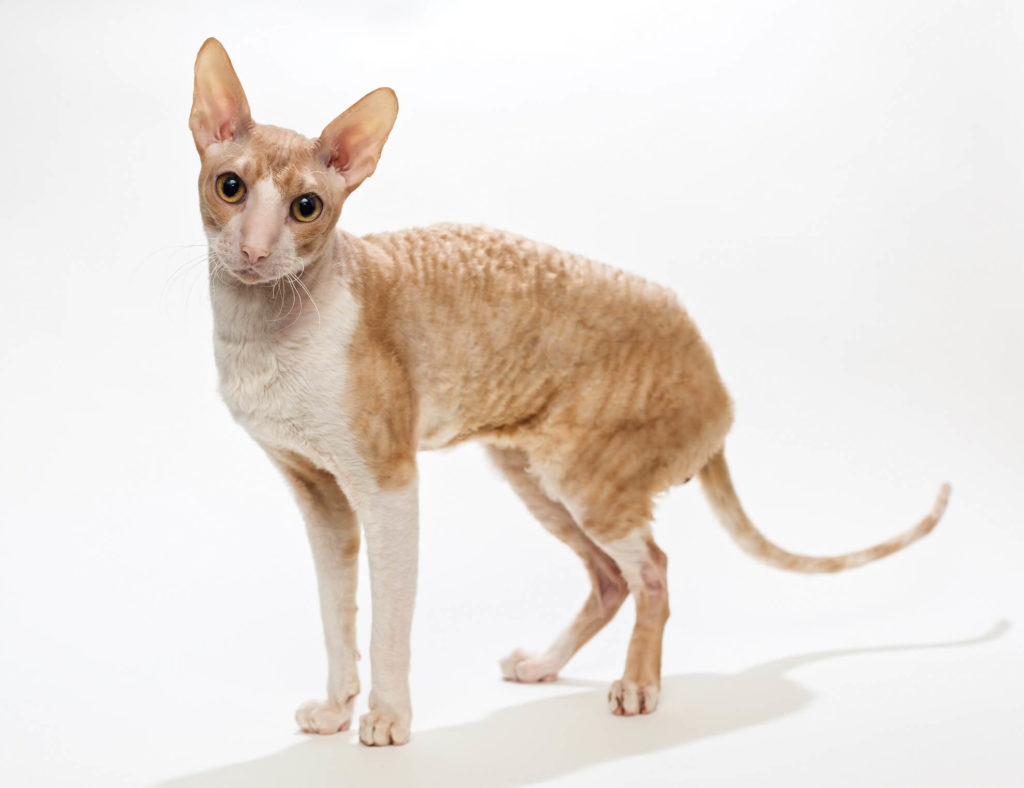
The Cornish Rex is a breed of domestic cat. The Cornish Rex has no hair except for down. Most cats have three types of hair in their coats: the outer fur, the middle layer, and the undercoat (down). The Cornish Rex only has the undercoat, which is very soft and wavy. The breed originated from a natural spontaneous mutation in Cornwall, England in 1950. They are highly active, agile cats often compared to greyhounds in terms of their lean physique.
Characteristics
Getting to Know the Cornish Rex
Origin & History
The Cornish Rex's development is closely tied to the rich tradition of British cat fancying. The world's first modern cat show was held at London's Crystal Palace in 1871 — an event that transformed casual cat keeping into a structured hobby and prompted British breeders to standardise and promote their native breeds, including the Cornish Rex.
As a breed born from a spontaneous genetic mutation, the Cornish Rex has a relatively short but dynamic history. Dedicated breeders worked swiftly to stabilise the mutation through careful selective breeding, and within decades had produced the consistent, recognised breed that exists today.
Size & Physical Traits
| Weight | 2–4 kg |
| Lifespan | 11–15 yrs |
| Size | medium-sized |
The Cornish Rex is a medium-sized cat, typically weighing between 2–4 kg in adulthood — well-proportioned with a balanced, elegant silhouette.
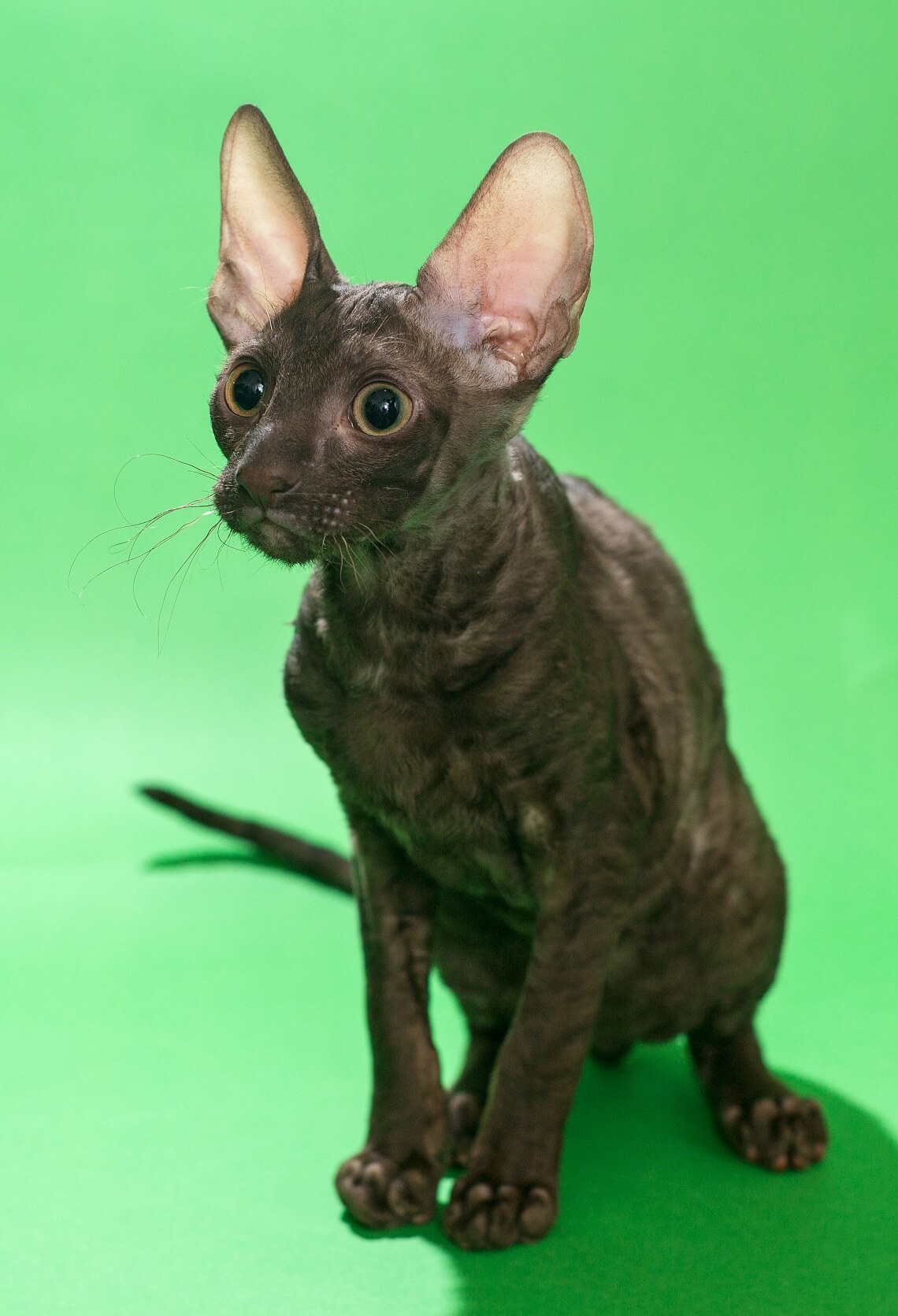
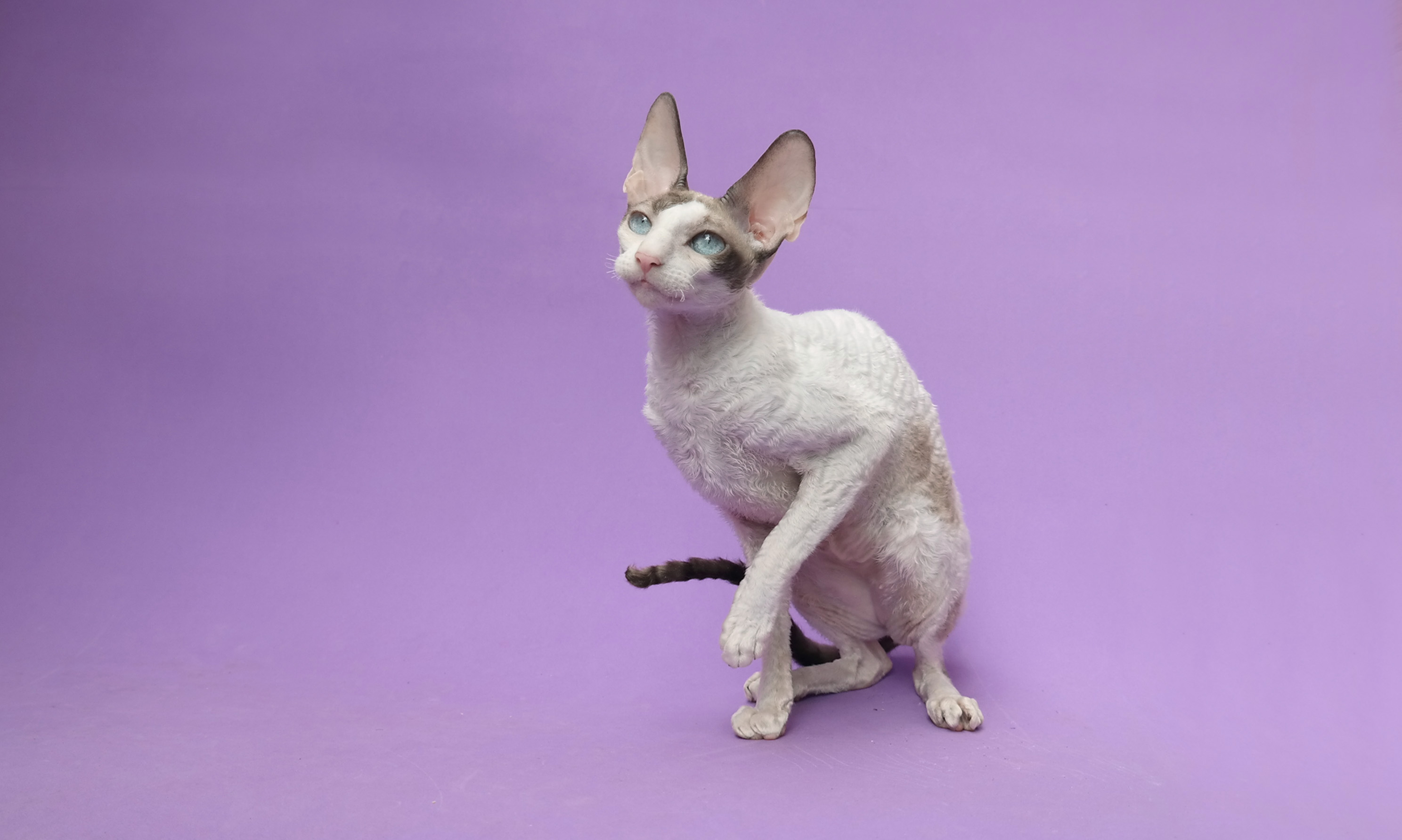
Coat type: a uniquely soft, wavy or curly coat caused by a natural mutation. The breed appears in a diverse palette including Various Colors and Patterns, with each colour and pattern combination producing a subtly distinct look that makes every individual Cornish Rex visually unique.
The Cornish Rex is active and social in bearing, with a notably long lifespan of 11–15 yrs — a companion capable of sharing many meaningful years of your life.
Cornish Rex Personality Profile
| Energy Level | ●●●●● |
| Affection | ●●●●● |
| Social Needs | ●●●●● |
| Intelligence | ●●●●● |
| Vocalisation | ●●●○○ |
Originally from United Kingdom, the Cornish Rex is a highly energetic and endlessly curious breed, forming intense bonds with family and strongly disliking extended alone time.
Cornish Rexs are deeply affectionate cats that constantly seek out laps, cuddles, and warm bodies — a true "velcro cat" that shadows favourite humans from room to room. They communicate selectively — a soft meow here, a purr there — making their vocalisations feel meaningful rather than noisy.
Cornish Rexs are exceptionally intelligent — they regularly figure out door handles, childproof latches, and puzzle feeders, and they thrive on trick training and interactive toys that challenge their nimble minds.
Known for being Active, Social, Curious, Playful, Cornish Rexs form deep, rewarding relationships with their families — bonds that grow richer with every passing year.
Grooming & Care Guide
| Grooming Needs | ●●○○○ |
| Shedding Level | ●○○○○ |
The Cornish Rex is delightfully low-maintenance — a quick brush once a week is typically all that's needed to keep the coat looking its best, freeing up more time for play.
Shedding is minimal — an excellent trait for households with allergies or a strong preference for fur-free sofas.
The Cornish Rex's delicate curly coat benefits from gentle handling — avoid stiff brushes and excessive combing that can break the fine hair structure; a soft rubber grooming glove works beautifully.
Beyond coat care, establish a routine that includes weekly ear checks, regular dental hygiene (brushing or dental treats significantly reduce periodontal disease risk), and nail trims every three to four weeks. These small habits, consistently maintained, form the backbone of a long and healthy life for your Cornish Rex.
Home Life & Compatibility
| Adaptability | ●●●●○ |
| Child Friendly | ●●●●○ |
| Dog Friendly | ●●●●○ |
The Cornish Rex is exceptionally adaptable, thriving equally in compact city apartments and sprawling countryside homes, and adjusting to new environments, schedules, and family dynamics with impressive ease.
They are genuinely wonderful with children of all ages — patient, playful, and remarkably tolerant — making them one of the finest feline choices for busy family homes. They also gel beautifully with other cats and dogs, making multi-pet households a harmonious and lively affair.
For cats spending long hours indoors, environmental enrichment is key — cat trees positioned at windows, rotating puzzle feeders, wand toys, and even bird-feeding stations outside provide vital mental stimulation and prevent the boredom that can lead to destructive behaviour.
Health & Longevity
| Lifespan | 11–15 yrs |
| Health Issues | ●●○○○ |
The Cornish Rex is celebrated for its robust constitution and relatively low incidence of hereditary conditions — with proper nutrition, routine parasite prevention, and regular vaccinations, these cats often enjoy long, trouble-free lives.
The Cornish Rex typically lives 11–15 years — notably long-lived even by feline standards. A high-quality, age-appropriate diet, a stimulating indoor environment, and consistent preventive healthcare form the three pillars of feline longevity.
Keep a health record including vaccination history, parasite treatments, and vet visit notes. Watch for early warning signs: unexplained weight changes, shifts in water intake, altered litter box habits, or changes in social behaviour — early detection transforms outcomes.
Expert Breed Profile
About the Breed
Imagine the racy elegance of a greyhound paired with playful personality of a clown – then dress it up in curls! You’ll have captured the essence of the Cornish Rex, one of the most unusual and charming felines to ever enchant cat lovers. Their unique marcel-waved coats are simple to care for and prone to only minimal shedding, which helps make this breed especially compatible with today’s busy lifestyles. Active, alert, and insistent on sharing every aspect of your life, you can expect a Cornish Rex to take firm possession of your heart and refuse to give it back.
Breed History
The breed’s distinctive coat is a mutation that began in Cornwall, England in 1950. When a curly-coated cream male kitten turned up in a litter of barn cats on Nina Ennismore’s farm, she recognized him as something special. After consulting her vet and a noted geneticist, she bred the kitten, Kallibunker, back to his mother, producing two more curly-coated kittens. Having had experience with Rex rabbits, Mrs. Ennismore decided to use the same name for her new breed of cat. Breedings with Burmese, Siamese, and British Shorthairs established that the mutation was recessive while building a diverse foundation for the new breed. A California breeder purchased a pair from Mrs. Ennismore in 1956 to establish the breed (now called the Cornish Rex) in the U.S. It was accepted for CFA registration in 1962 and achieved Championship status two years later.
Character & Temperament
Today’s “Corneys” are not only extremely intelligent, but adaptable, adventurous and love to travel. However, they are also devoted to their people and are often called “Velcro kitties” because of their need to maintain physical contact with that special person. Given their exuberant natures and high activity levels, they are in constant search of new things to play with … which may not actually be appropriate things for them to play with! Owning a Cornish Rex calls for thoroughly child proofing the house and keeping fragile objects behind closed doors. Cornish Rex antics will amuse children and adults alike, and dogs will find them ready playmates. When your Cornish Rex is not seeking attention, providing affection, or engaged in play, it is most likely looking for food. Despite their slim builds and fine bones, these cats have enormous appetites and will often consume vegetables, fruits and other edibles unlikely to appeal to most cats. They will engage in conversation but are not given to unnecessary or loud vocalizing. Why talk when there are things to be played with?
Physical Appearance
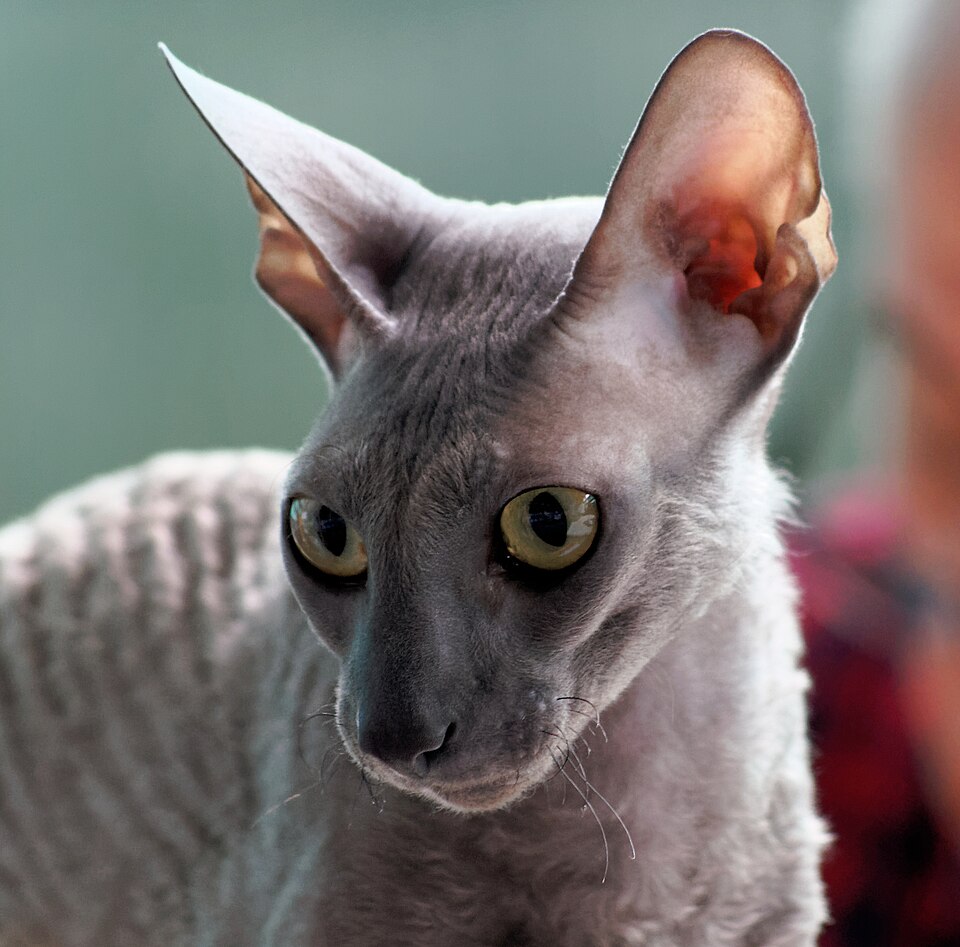
Short, close-lying, and covered with tight marcel waves, the coat of a Cornish Rex has always been its defining feature. But it’s not just about the curl. The coat is completely lacking in guard hairs, giving it an unbelievably soft, silky texture. It must also feel dense to the touch; the breed standard assigns 40 points alone to the coat and requires density and softness as well as curl. Lean and statuesque, with its arched back, egg-shaped head, large high-set ears, huge luminous eyes, and prominent Roman nose, the Cornish Rex can never be mistaken for any other breed.
Grooming
Because of the nature of the coat, regular combing is not needed. It is, however, important to pay attention to the ears, which may accumulate waxy buildup more quickly than other breeds and should be cleaned often with a cotton ball or Q-tip. Bathing may be needed occasionally as some cats may become greasy over time. These are true “wash-and-wear” cats, needing only a good shampoo and a thorough towel dry. (Never use a blow dryer, it will ruin the curls!)
Living with This Breed
Popular since their advent in the U.S., Cornish Rex are also bred in Europe and Asia. This is a sturdy, vigorous breed with no inherited health issues, but do note that the lack of guard hairs makes the coat fragile and it may not provide sufficient protection from the sun (yes, cats can get sunburned). Additionally, these cats are easily chilled in cold weather, so you may want to provide yours with a sweater.
Breed Overview
It’s easy to see why the Cornish Rex turns heads: The breed’s short and curly or wavy coats, angular faces, high cheekbones, and large ears stand out from other cats. Their athletic build and kitten-like energy also earn them the nickname "Greyhound of the cat world," says Mark Kantrowitz, a champion cat fancier of Cornish Rex cats. These curly-haired cuties can grow to be 6–10 pounds and 8–12 inches at the shoulders. Caring for a Cornish Rex Most cats have three layers of fur to keep them warm: A thick outer layer of guard hairs, a middle layer of awn hairs, and a soft and fine inner layer of down, says Lisa Kuta, co-founder of Cornish Rex Friends, a national Cornish Rex rescue.
Care Guide
Most cats have three layers of fur to keep them warm: A thick outer layer of guard hairs, a middle layer of awn hairs, and a soft and fine inner layer of down, says Lisa Kuta, co-founder of Cornish Rex Friends, a national Cornish Rex rescue. But not Cornish Rexes. Due to a genetic mutation, they only have the down layer, giving them the feel of cashmere and rows of curls called a marcel wave. But don't be fooled by the Cornish Rex's low-shedding coat—they aren't completely hypoallergenic cats. The protein that triggers allergies in humans is found in their skin, fur, and saliva, so no cat is truly allergy-free. But the good news is that because the Cornish Rex has less fur than other breeds, they may be a better choice for those with mild to moderate cat allergies. If you’re interested in bringing home a rex cat, keep in mind that each feline in the Rex cat breed family, which includes the Cornish Rex, Devon Rex, and Selkirk Rex, is unrelated. While they all have a curly coat trait, each is a different breed that developed independently from spontaneous mutations.