Origin
Myanmar
Lifespan
12–16 years
Weight
4–7 kg
Group
Semi-Longhair
Personality
Colors & Patterns
Seal Point · Blue Point · Chocolate Point · Lilac Point · Flame Point · Cream Point
Birman
About This Breed
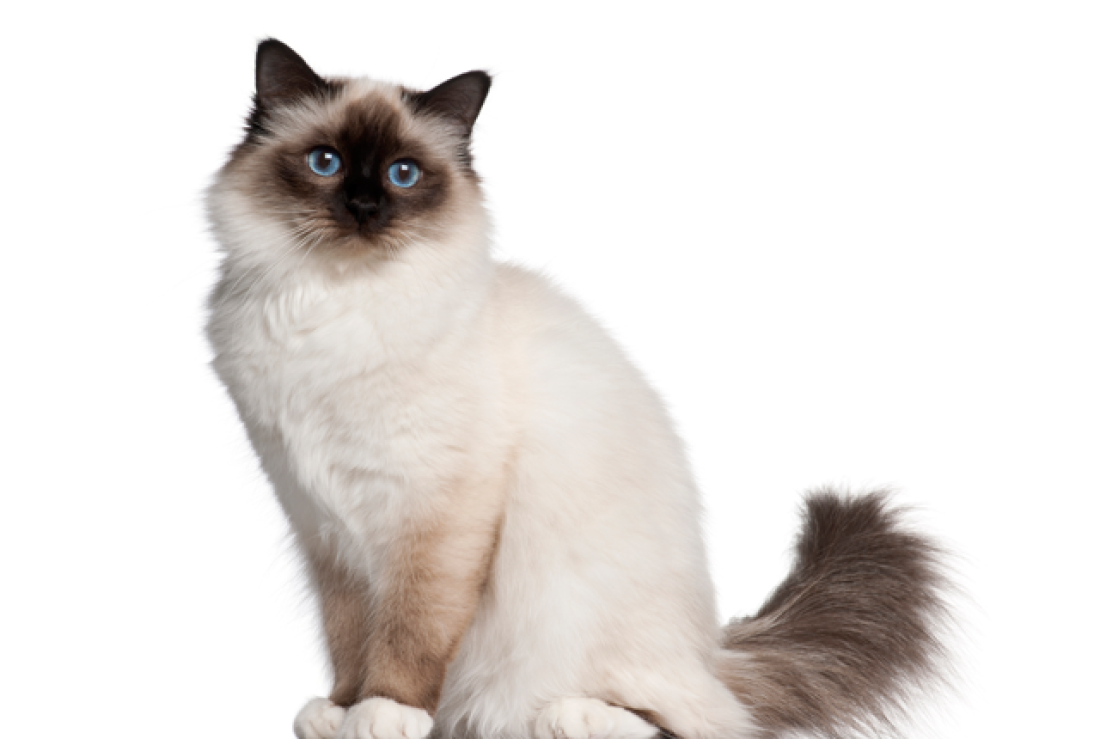
The Birman (also called the Sacred Cat of Burma) is a long-haired, colour-pointed cat breed distinguished by a silky coat, deep blue eyes, and contrasting white gloves on their paws. According to legend, the Birman cat was the companion of the Kittah priests and was given its golden colour and blue eyes by the goddess Tsun-Kyan-Kse. They are known for being gentle, calm cats that get along well with children and other pets.
Characteristics
Getting to Know the Birman
Origin & History
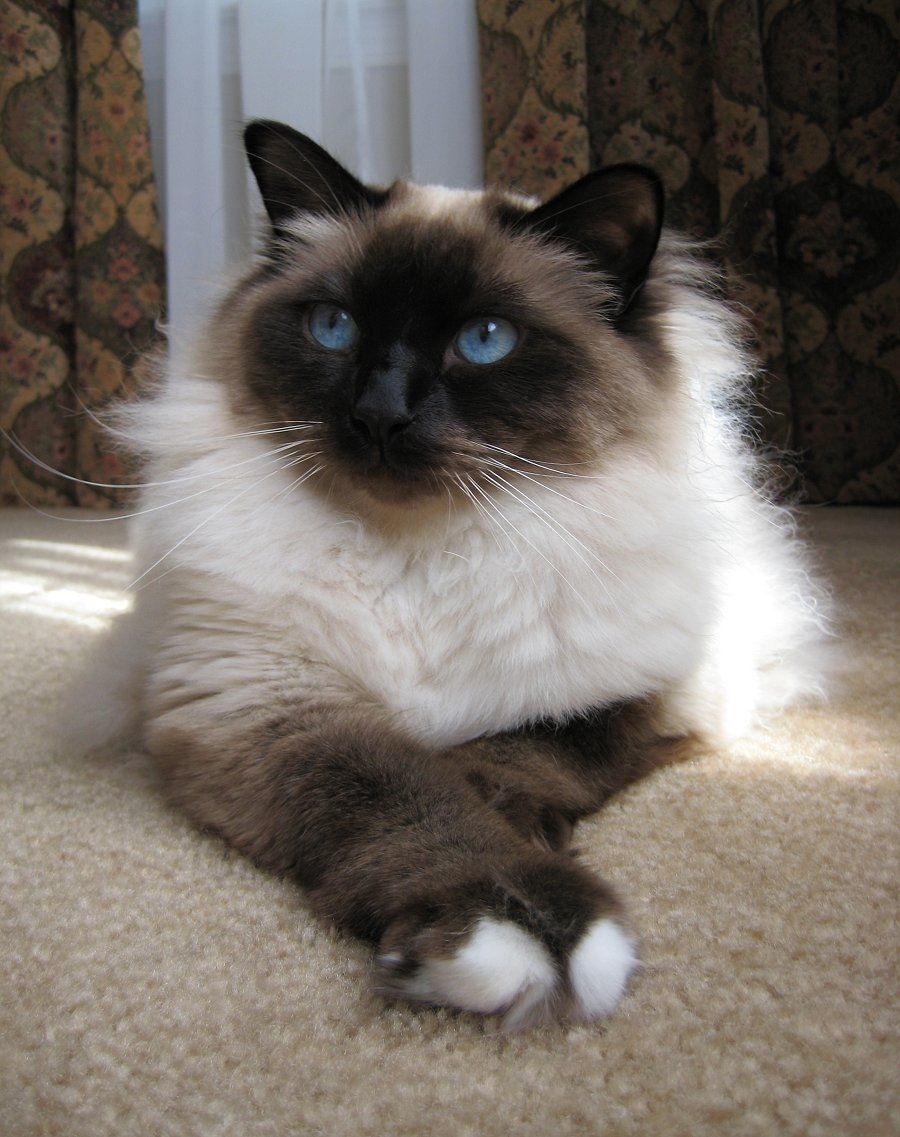
The Birman is steeped in Burmese legend — temple cats said to carry the souls of deceased monks, guarding sacred shrines. Whether or not the mythology holds, what is certain is that this breed developed for centuries among Burma's monasteries before captivating Western breeders in the 20th century.
Through the efforts of successive generations of dedicated breeders, the Birman's distinctive appearance and temperament were gradually standardised and formally accepted by the world's leading feline registries. The breed is now a familiar presence at international cat shows and commands a devoted following worldwide.
Size & Physical Traits
| Weight | 4–7 kg |
| Lifespan | 12–16 yrs |
| Size | medium-to-large |
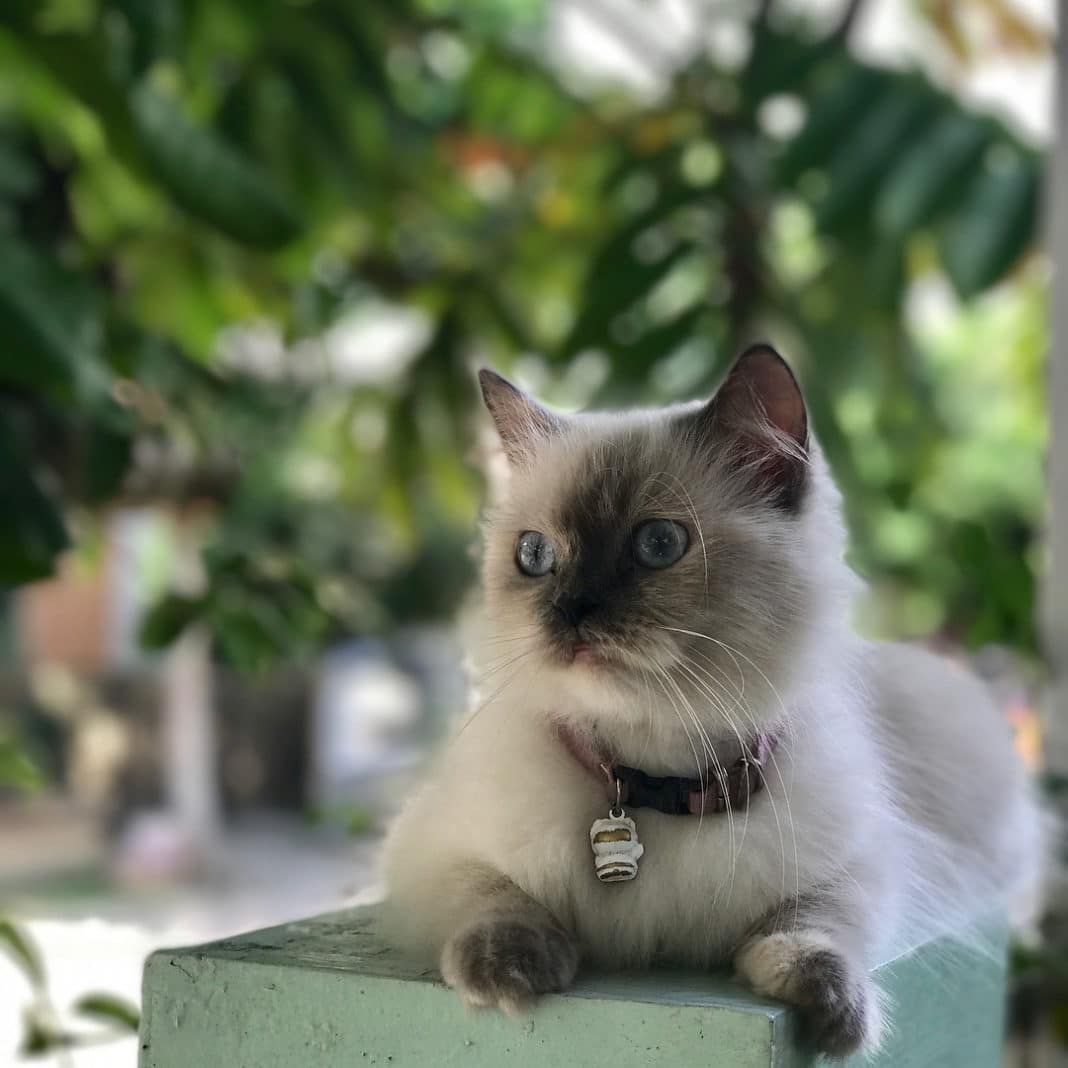
The Birman is a medium-to-large cat, typically weighing between 4–7 kg in adulthood — well-proportioned with a balanced, elegant silhouette.
Coat type: a semi-long, plush coat that is easier to maintain than full longhairs. The breed appears in a diverse palette including Seal Point · Blue Point · Chocolate Point · Lilac Point · Flame Point · Cream Point, with each colour and pattern combination producing a subtly distinct look that makes every individual Birman visually unique.
The Birman is gentle and calm in bearing, with a notably long lifespan of 12–16 yrs — a companion capable of sharing many meaningful years of your life.
Birman Personality Profile
| Energy Level | ●●●○○ |
| Affection | ●●●●● |
| Social Needs | ●●●●○ |
| Intelligence | ●●●○○ |
| Vocalisation | ●●○○○ |
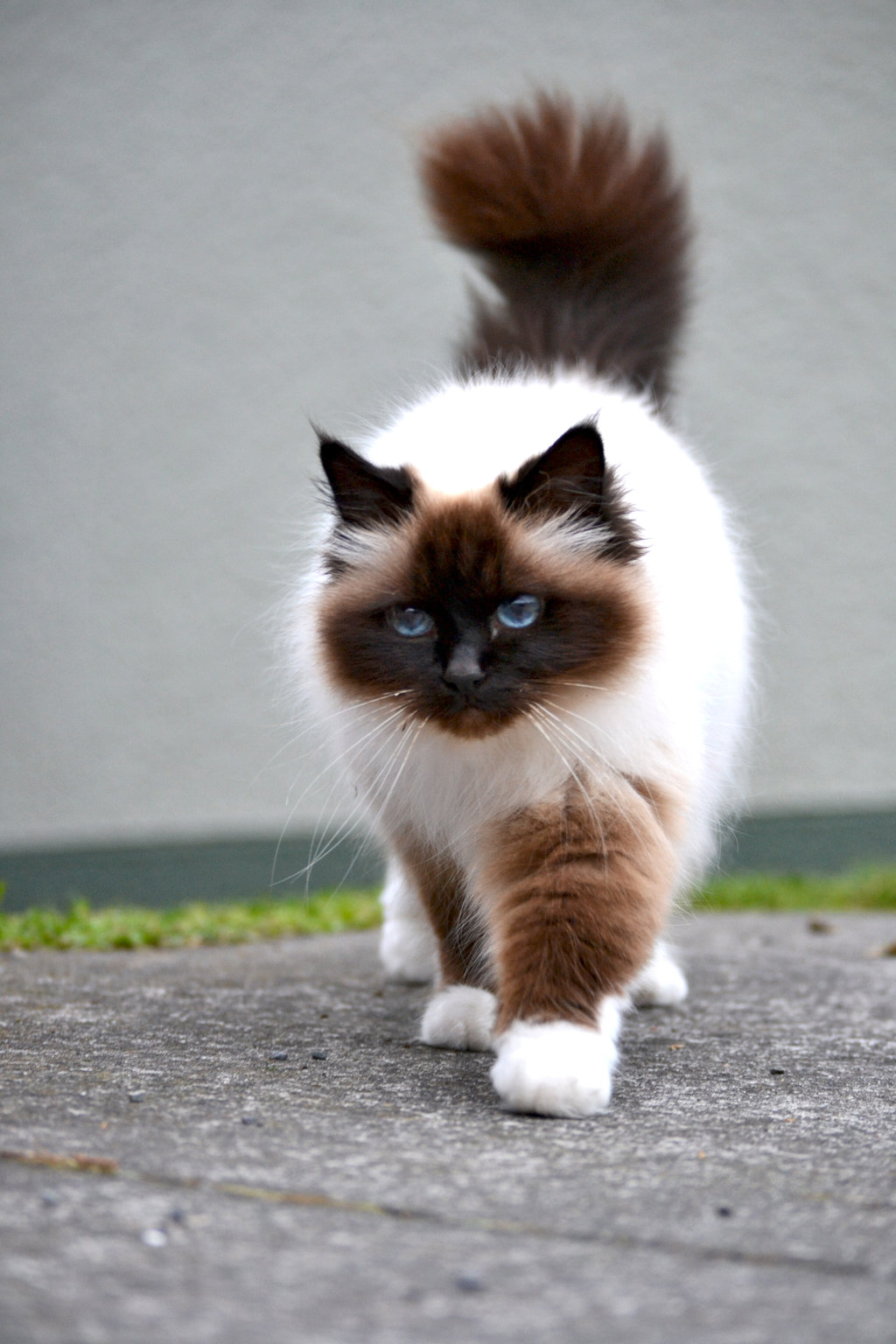
Originally from Myanmar, the Birman is a moderately active, balancing playtime with peaceful rest breed, forming intense bonds with family and strongly disliking extended alone time.
Birmans are deeply affectionate cats that constantly seek out laps, cuddles, and warm bodies — a true "velcro cat" that shadows favourite humans from room to room. They are remarkably quiet cats, rarely demanding attention through sound, which makes them ideal companions in noise-sensitive environments.
Birmans are bright and responsive, picking up new behaviours readily when rewarded with treats and praise.
Known for being Gentle, Calm, Affectionate, Social, Birmans form deep, rewarding relationships with their families — bonds that grow richer with every passing year.
Grooming & Care Guide
| Grooming Needs | ●●●○○ |
| Shedding Level | ●●●○○ |
The Birman's coat requires brushing two to three times per week to stay healthy and tangle-free; increase frequency during seasonal shedding periods, and include routine nail trims and ear checks.
Shedding is moderate and manageable; a consistent brushing routine keeps loose hair from accumulating on furniture and clothing.
Beyond coat care, establish a routine that includes weekly ear checks, regular dental hygiene (brushing or dental treats significantly reduce periodontal disease risk), and nail trims every three to four weeks. These small habits, consistently maintained, form the backbone of a long and healthy life for your Birman.
Home Life & Compatibility
| Adaptability | ●●●●○ |
| Child Friendly | ●●●●● |
| Dog Friendly | ●●●●● |
The Birman is exceptionally adaptable, thriving equally in compact city apartments and sprawling countryside homes, and adjusting to new environments, schedules, and family dynamics with impressive ease.
They are genuinely wonderful with children of all ages — patient, playful, and remarkably tolerant — making them one of the finest feline choices for busy family homes. They also gel beautifully with other cats and dogs, making multi-pet households a harmonious and lively affair.
For cats spending long hours indoors, environmental enrichment is key — cat trees positioned at windows, rotating puzzle feeders, wand toys, and even bird-feeding stations outside provide vital mental stimulation and prevent the boredom that can lead to destructive behaviour.
Health & Longevity
| Lifespan | 12–16 yrs |
| Health Issues | ●●○○○ |
The Birman is celebrated for its robust constitution and relatively low incidence of hereditary conditions — with proper nutrition, routine parasite prevention, and regular vaccinations, these cats often enjoy long, trouble-free lives.
The Birman typically lives 12–16 years — notably long-lived even by feline standards. A high-quality, age-appropriate diet, a stimulating indoor environment, and consistent preventive healthcare form the three pillars of feline longevity.
Keep a health record including vaccination history, parasite treatments, and vet visit notes. Watch for early warning signs: unexplained weight changes, shifts in water intake, altered litter box habits, or changes in social behaviour — early detection transforms outcomes.
Expert Breed Profile
About the Breed
When a cat breed is known as the Sacred Cat of Burma, you would expect it to possess an exceptionally sweet nature along with a gentle demeanor and a quiet dignity all its own. The Birman fulfills all these expectations and more. There’s an otherworldly cast to those enchanting blue eyes and a majestic air that accompanies these medium-to-large cats, their fine, flowing coats subtly tinted with “golden mist” and their long yet stocky bodies accented with elegant, symmetrical markings. It’s easy to see why the Birman has made such a powerful impression on cat lovers worldwide, and why it is considered a cat of mystery and legend.
Breed History
Numerous folk tales describe how the Birman obtained its unique markings, while the real Birman history keeps everyone guessing. We know that a breeding pair was shipped from Burma to France in approximately 1919; the female arrived pregnant and became the foundation of the breed in France. The name is derived from “Birmanie,“ the French form of Burma. The Birman arrived in the United States in 1959 and was accepted for CFA registration in 1967. Many Birman breeders follow the French tradition of assigning all kittens born in a particular year given names that begin with the same letter of the alphabet. Kittens born in 2023 would have names starting with ‘U’, and in 2024, ‘V’, and so on till the alphabet is complete, then the cycle begins again.
Character & Temperament
Birman cats are quite intelligent, they enjoy learning and typically respond well to training. Sociable and people-oriented, they love human company and are playful and desirous of attention. They are moderately active but very “helpful” cats and will often try to assist you with work or common household tasks. You will never feel alone with a Birman by your side. Because the Birman is patient, even-tempered, and tolerant, it makes an excellent choice for families with children and other pets. They are very social cats who do not do well alone for long periods of time; if you work outside the home and have no other pets, you may want to consider a pair. Birmans are relatively quiet cats; most are soft spoken and refined, with soft chirp-like voices. However, with constant response from their owners when the cat meows, the Birman may become quite a talker.
Physical Appearance
Medium-sized to large cats, Birmans have broad, rounded heads, striking blue eyes and medium-length Roman noses. These are color-pointed cats who also carry the bicolor gene, so their lush, creamy coats will be pale on the body and darker on the face, legs, and tail. The bicolor gene produces the white gloves on the front paws and laces on the back paws. A paler tone of the point color, known as the “golden mist,” can sometimes be seen on the body and back. Originally recognized only in solid seal, blue, lilac, and chocolate point, Birmans are now also available with tabby-patterned points, and also in red, cream, and tortie point colors. They take approximately three years to mature. Females are typically smaller than males but both have substantial boning and good body weight.
Grooming
Birmans shed less than most other long-haired cats. Since there is no undercoat to get tangled or matted, the coat is easy to care for and a weekly combing should be sufficient to keep the cat looking its best. Most Birmans do not require regular bathing, but there’s no doubt that an occasional bath will add to their natural beauty. If you do plan to bathe your cat, consult your breeder for the right products to use; every coat is slightly different.
Living with This Breed
During World War II, Birmans almost became extinct and there was only one breeding pair left in Europe by the time the war was over. Outcrossing with Persians and Siamese enabled French breeders to rebuild the breed and by the early 1950s, pure Birman litters were again being produced. Breeders continue to work to promote the breed and manage any health concerns. Testing for hypertrophic cardiomyopathy and other conditions has proven instrumental in enabling them maintain a healthy, diverse gene pool.
Breed Overview
As the Birman cat legend goes, there were once 100 golden-eyed temple cats with long white fur and mittened paws the color of Earth. Upon the tragic death of the temple’s high priest, who spent his days worshiping a blue-eyed goddess, a loyal cat named Sinh touched him and miraculously transformed. Sinh's fur turned golden, eyes sapphire blue, and paws pure white. It's said all the cats followed suit, earning the Birman cat the nickname Sacred Cat of Burma. Outside of legends, the origin of the blue-eyed, white-mittened Birman cat remains a mystery.
Care Guide
The Birman is a friendly cat breed that loves their people … and any other people who stop by to say hello. “Some say they are dog-like in their personalities, always your loyal best friend,” says Diane Coppola, president of National Birman Fanciers, a member of the Birman Breed Council, and head of NBF’s Birman Rescue. While their hair is long, it’s silky smooth and doesn’t tend to mat. Coppola recommends brushing your Birman a few times a week; they'll likely enjoy the attention.